When Do Babies Start Teething? Signs, Symptoms, and Remedies for First Teeth
Published on
February 3, 2026
Author
Samia Haddad
Project Writer | Formerly a dedicated volleyball player during her university years, Samia seamlessly integrated holistic approaches into her lifestyle to maintain peak physical and mental health. Her disciplined mindset, honed on the varsity court, persisted beyond graduation, driving her passion for research into the intricate connections between the body and mind. Now, as a writer for ThinkHealth and Wellness, Samia shares her personal journey and well-honed routines, offering valuable insights into holistic well-being. Through her unique experiences and commitment to a healthy lifestyle, Samia contributes to the platform's mission of providing comprehensive and inspiring content for individuals seeking natural health alternatives.
Can music and movement help fine motor skills?
Yes—finger plays, clapping games, and dance routines that use hand gestures all help. Combine rhythm and repetition for deeper learning.
How can educators encourage home practice?
Send home simple activity ideas, kits, or worksheets. Offer short instructions and encourage family involvement. Regular practice builds lasting progress.
What crafts are best for fine motor practice?
Try origami, sticker scenes, stringing pasta, or painting with Q-tips. Crafts that use small pieces build precision and control.
You're checking your baby's gums for the hundredth time this week. Is that a white bump? Why is she drooling like a Saint Bernard? And seriously, when do these teeth actually show up?
Take a deep breath. Teething is one of those milestones that seems to drag on endlessly. This guide will walk you through everything you need to know about baby teething: when to expect them, the order in which they typically appear, and which symptoms are real versus old wives’ tales. You’ll discover safe ways to soothe a cranky baby, which products are worth tossing, and how to care for those tiny teeth.
When do babies start teething?
Here’s what the books say: most babies get their first tooth somewhere between 4 and 7 months, which is considered the most common window. That said, teething timelines can vary widely. Some babies surprise their parents with an early tooth around 3 months of age, while others happily reach 12 months with nothing but gums. In rare cases, babies are even born with a tooth already in place, which feels a little wild but does happen.
So what actually determines when teething starts? Genetics play a major role. If you or your partner got teeth early, your baby may follow suit, while late bloomers often raise late-blooming teethers. Overall health and nutrition can also influence timing, though usually in smaller ways.
If your baby reaches 15 months without a single tooth, it’s worth mentioning to your pediatrician so they can take a closer look. In most cases, however, late teething simply means your baby is moving at their own pace and that’s completely normal.
What order do baby teeth come in?
Good news: teeth don’t appear at random. They follow a fairly predictable pattern, and knowing it can save you from overanalyzing every tiny bump on your baby’s gums.
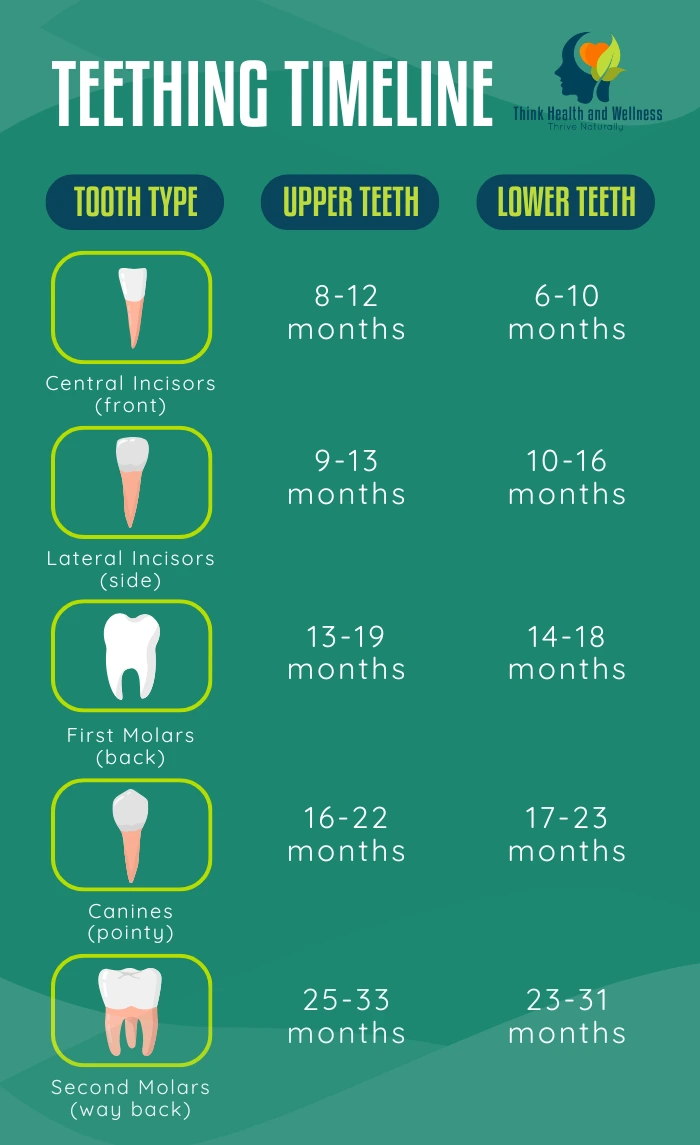
Most babies start with the bottom front teeth (lower central incisors), which usually emerge between 6 and 10 months. You’ll typically see two small white teeth pushing through the lower gum first.
Next are the top front teeth (upper central incisors), arriving around 8 to 12 months and giving your baby that unmistakable, gap-toothed smile.
From there, the teeth beside them move in. Upper lateral incisors usually appear between 9 and 13 months, followed by the lower lateral incisors at around 10 to 16 months, as your baby starts to look less gummy and more toothy.
Instead of jumping straight to pointy teeth, babies usually skip ahead to the first molars. These larger back teeth tend to come in between 13 and 19 months on top and 14 to 18 months on the bottom, and they’re often more uncomfortable because of their size.
After that, the canines—those sharp, pointy teeth—fill in the gaps. Upper canines typically arrive between 16 and 22 months, with lower canines following close behind at 17 to 23 months.
Finally, the second molars complete the set. Lower ones usually emerge between 23 and 31 months, while upper second molars finish things off around 25 to 33 months.
At 3 years old, most children have all 20 primary teeth. A helpful rule of thumb: babies tend to get about four teeth every six months, lower teeth often arrive before upper ones, and teeth usually come in pairs like tiny matching sets.
Real signs of teething vs. myths
Let's talk about what teething actually causes versus what gets blamed on teething. Spoiler alert: teething gets blamed for everything.
What teething actually does
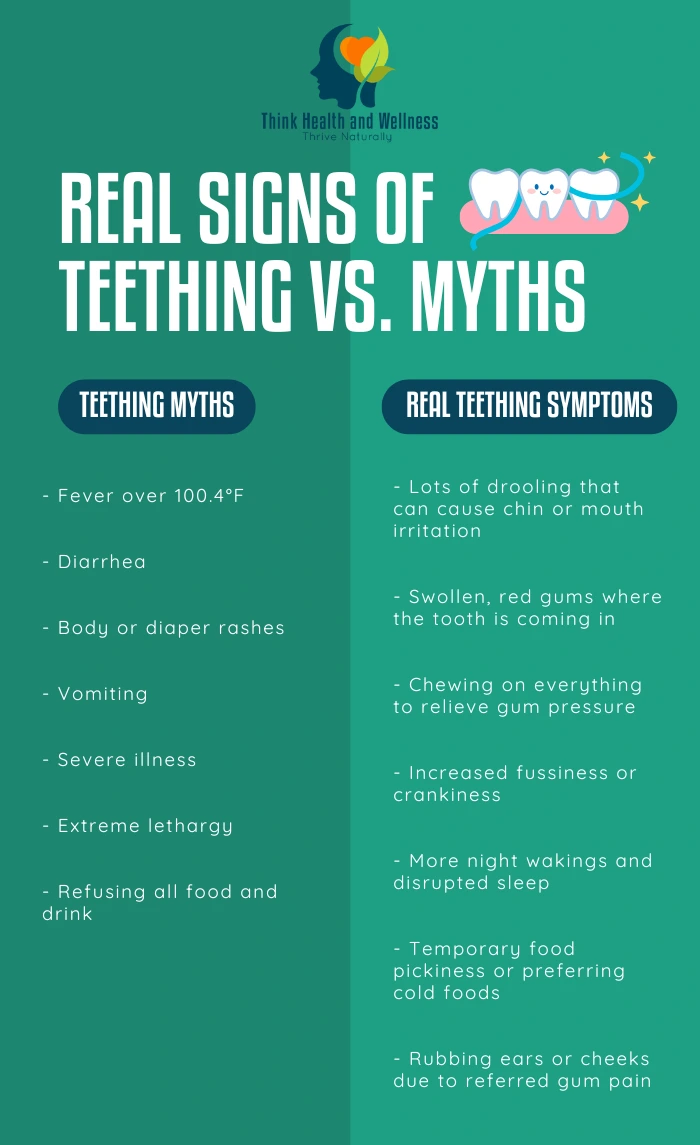
✅ Excessive drooling
And I mean a lot of drool. Bibs will be constantly soaked, and the skin around your baby’s mouth and chin can turn red and irritated from staying wet all day. Burp cloths quickly become your best friend.
✅ Swollen gums
The gums get puffy where the tooth pushes through. The area may look red, puffy, or even have a tiny bruise-like spot. It can look alarming, but it’s completely normal. That little tooth is just doing its thing.
✅ Increased Mouthing
Toys, fingers, your phone, the dog’s tail - nothing is safe. This increased mouthing helps relieve pressure on sore gums and gives your baby a bit of comfort.
✅ Irritability
Your usually happy baby turns into a tiny grump. The discomfort makes them fussy. Nighttime is often worse because there are fewer distractions.
✅ Disrupted sleep patterns
Teething babies tend to wake more frequently at night, and lying down can make the pain feel worse. You’re tired. They’re tired. Everyone's tired.
✅ Food pickiness
Some babies eat less because their mouth hurts, while others prefer cold foods that soothe their gums. If a meal or two gets skipped, try not to stress, it’s usually temporary.
✅ Ear and cheek rubbing
Gum pain travels along shared nerves, so babies often rub nearby areas that feel uncomfortable. This doesn’t automatically mean an ear infection, but it’s something worth keeping an eye on.
The myths (AKA things teething doesn't cause)
❌ Fever
Nope, this isn’t a true teething symptom. While teething may cause a very mild temperature increase (under 100.4°F), an actual fever usually points to illness, not erupting teeth. If your baby has a fever, look for other causes and don’t dismiss it as teething.
❌ Diarrhea
Research shows no real connection here. When a baby has diarrhea, it’s far more likely they’re sick or reacting to something they ate, rather than cutting a new tooth.
❌ Body rashes
A drool rash around the mouth or chin makes sense and is fairly common. But, rashes on the body or in the diaper area suggest something else is going on and shouldn’t be blamed on teething.
❌ Really sick symptoms
Vomiting, a high fever, extreme lethargy, or refusing all food and fluids are not part of teething. These are signs of illness and are reasons to call the doctor promptly.
So why stress this point? Because teething is often used as an explanation that delays medical care. When real symptoms are brushed off, real illnesses can go untreated. When in doubt, call your pediatrician, they’d much rather answer questions than see your baby suffer.
Safe ways to soothe teething pain and comfort your baby
Okay, so your baby is miserable. What can you actually do about it? Quite a bit, actually.
✅ Cold stuff works magic
Chilled items numb sore gums and ease discomfort: a clean washcloth refrigerated for 30 minutes, a cold spoon, or, if your baby is eating solids, cold applesauce or yogurt can all soothe effectively.
✅ Use teething toys
Stick to solid rubber or silicone teethers and avoid liquid-filled ones that might crack or leak. Chill them in the fridge, but never freeze; rock-hard toys can bruise tender gums instead of comforting them.
✅ Give them a gum massage
Wash your hands and gently rub your baby’s gums with a clean finger. Light pressure can be surprisingly soothing and costs nothing.
✅ Comfort and distraction
Extra cuddles, rocking, a stroller walk, or a silly game can take their focus off the pain, sometimes more effectively than anything else.
✅ Pain medicine when you need it
On particularly rough days, acetaminophen or ibuprofen can ease discomfort, but always follow dosing instructions, avoid ibuprofen for babies under six months, and check with your pediatrician if you’re unsure.
What to avoid: the stuff that's actually dangerous
Some products and old-school remedies aren’t just ineffective, they can actually be dangerous. When it comes to teething, there are a few things that are best avoided altogether.
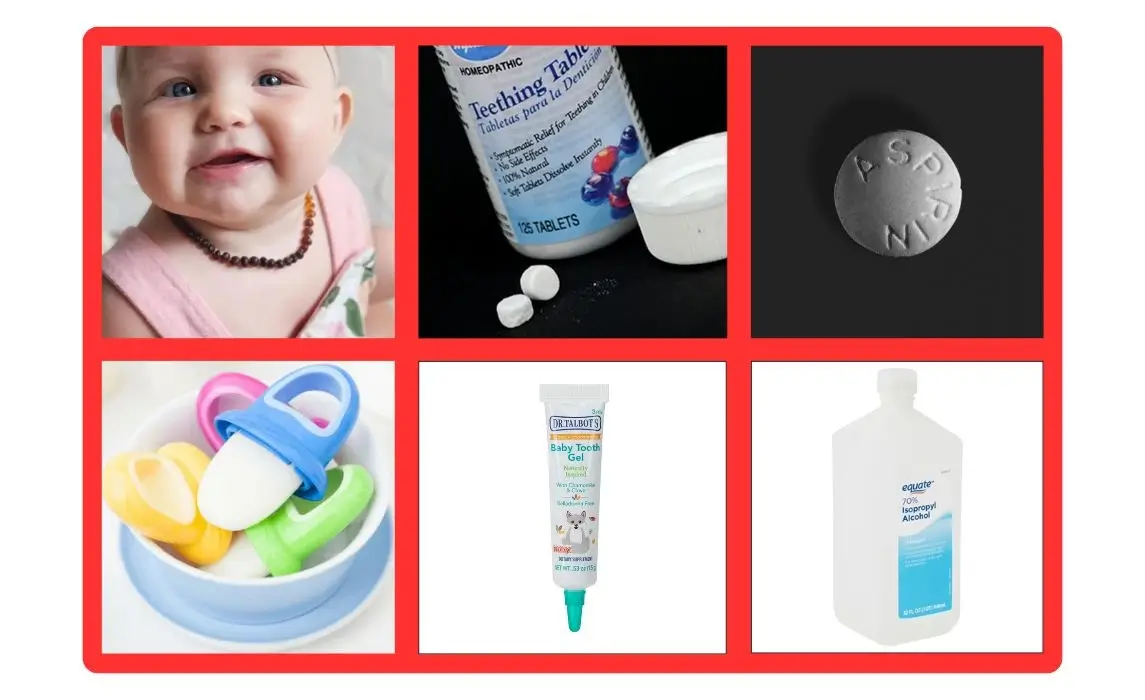
❌ Amber teething necklaces and bracelets
Just no. Sellers often claim that amber releases pain-relieving substances when it warms against the skin, but there’s no scientific evidence to support this. What is real, however, is the risk of strangulation if the necklace catches on something, or choking if the beads break apart. The American Academy of Pediatrics advises against using them, and this is one warning worth taking seriously.
❌ Numbing gels or teething gels with benzocaine
The Food and Drug Administration warns against their use in children under two because they can trigger a rare but dangerous condition called methemoglobinemia, which reduces oxygen levels in the blood. Symptoms may include pale or bluish skin and difficulty breathing, making the risk far greater than any temporary relief.
❌ Homeopathic teething tablets
Some have been recalled after being found to contain belladonna, a toxic substance. According to the FDA, certain products were linked to seizures and breathing problems in infants, which makes them an easy pass.
❌ Rubbing alcohol on gums
Another outdated remedy that should never be used. Even small amounts of alcohol can be harmful to babies, and there is no safe benefit to justify the risk.
❌ Aspirin
It should never be placed on a baby’s gums or given orally, as aspirin use in children has been linked to Reye’s syndrome, a rare but serious condition that affects the brain and liver.
❌ Rock-hard frozen stuff
Teethers or washcloths that are completely frozen become too stiff and can bruise tender gums instead of soothing them. Cold is helpful, but frozen solid crosses the line.
Caring for those first teeth
Surprise: dental care starts the moment you see that first little tooth. Seems early, right? But it matters.
Start brushing right away
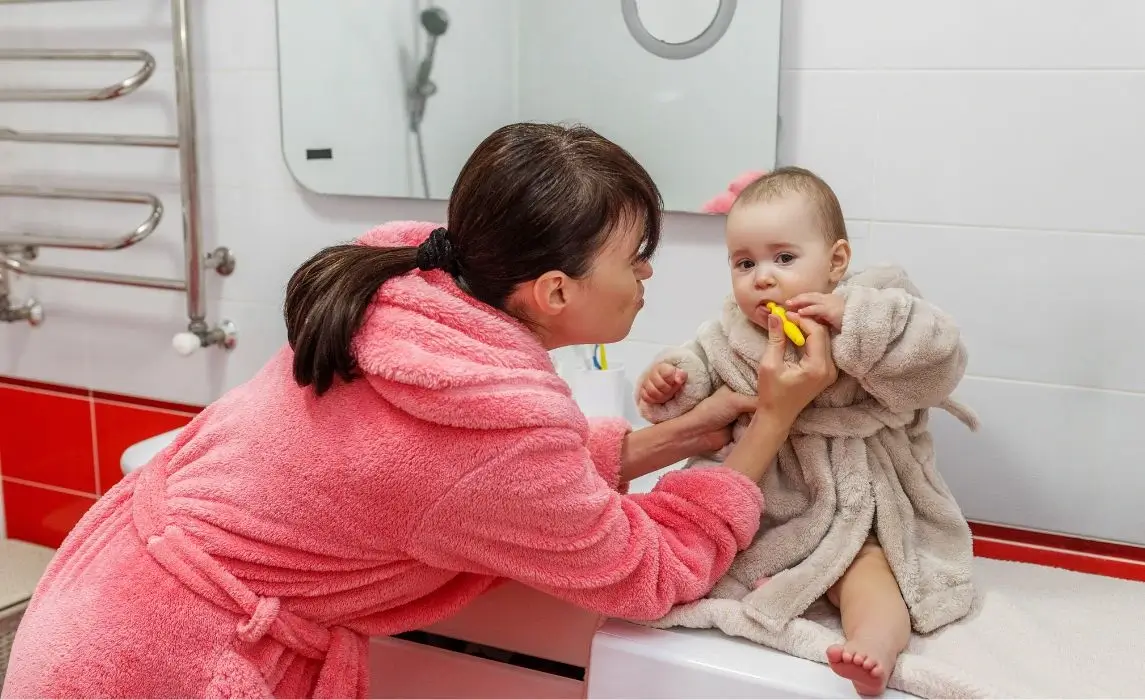
As soon as the first tooth appears, begin brushing using a soft baby toothbrush or a clean, damp cloth. Brush gently twice a day, with the bedtime session being the most important since bacteria have all night to sit on teeth.
Use fluoride toothpaste
For babies and toddlers under three years old, use only a tiny smear of fluoride toothpaste, about the size of a grain of rice. Even this small amount of fluoride plays a key role in strengthening enamel and helping prevent cavities in baby teeth
Make it routine
Brush after breakfast and again before bed to create a predictable daily habit. Turning it into a game, singing a song, or making silly faces in the mirror can help tooth brushing feel fun and familiar rather than something your child resists.
No bottles in bed
Allowing milk, formula, or juice to sit on teeth overnight can quickly lead to serious decay, commonly known as baby bottle tooth decay. If your baby needs something for comfort at bedtime, water or a pacifier are much safer choices.
See the dentist by their first birthday
Yes, it really should happen that early. During this visit, the dentist will check how your child’s teeth are developing, watch for potential concerns, and share personalized advice, while also helping your child become comfortable with dental visits from the start.
Watch what they drink
Limit juice and sugary drinks as much as possible, since even natural sugars found in fruit juice can contribute to cavities. Water and milk remain the best everyday options for protecting developing teeth.
Check their teeth regularly
Take a close look at your baby’s teeth every few days, watching for white or brown spots that may signal early decay. Catching these changes early makes treatment simpler and far less stressful.
Most teething stuff resolves on its own. But sometimes you need backup.
Call your pediatrician if:
Your baby has a fever over 100.4°F (38°C)
Teething symptoms drag on for days without a tooth showing up
Your baby refuses food and drinks for more than a day
You see signs of an ear infection (ear tugging plus fever, extreme fussiness, or drainage)
Your baby has diarrhea, vomiting, or a rash on their body
Your baby seems in serious pain that nothing helps
There's no tooth by 15 months
You notice anything weird with the teeth or gums, like strange colors or lumps
Call your dentist if:
You see white, brown, or dark spots on teeth
Teeth look chipped or broken
Gums bleed when you brush
Your toddler complains about tooth pain
Trust your gut. You know your baby better than anyone. If something feels off, get it checked. Healthcare providers would rather answer your questions than have you worry alone at 2 a.m.
One day, often when you least expect it, you’ll realize the teething phase is finally over. Your baby will have a mouthful of teeth, and the sleepless nights and drool-soaked shirts will already feel far away.
Teething feels endless when you’re in it, but in reality, it’s a brief season that passes faster than it seems. What stays with you is the smile.
So take pictures of that gummy grin, laugh at the drool, and give yourself grace on the hard days. You’re helping your baby through real discomfort, and that takes patience and love.
Before you know it, you'll be dealing with a whole new set of parenting challenges. Maybe you'll even miss the teething days. (Okay, probably not. But you'll definitely miss that toothless baby smile.)
1. How long does teething last, and how long does each tooth take to come in?
Teething can start months before you see a tooth and usually happens in waves until around age 3, when most kids have all 20 baby teeth. For each tooth, symptoms often flare for a few days to about a week as the tooth moves closer to the gumline, then ease once it breaks through (though some babies have on-and-off discomfort).
2. What is the normal order of baby teeth coming in?
Typically, baby teeth appear in this general order: bottom front teeth, top front teeth, side incisors, first molars, canines, then second molars. Most kids have all 20 baby teeth by around age 3.
3. What are the real signs of teething in babies?
Common teething symptoms include heavy drooling, swollen or tender gums, increased chewing/mouthing, fussiness, sleep disruption, mild appetite changes, and ear/cheek rubbing. These symptoms often come and go as each tooth moves through the gums.
4. Does teething cause fever or diarrhea?
Teething does not cause a true fever (over 100.4°F / 38°C) or diarrhea. A very mild temperature rise can happen, but significant fever, vomiting, diarrhea, or widespread rashes usually point to illness—not teething—and should be evaluated.
5. What are safe ways to soothe teething pain—and what should parents avoid?
Safe options include chilled teething toys (refrigerated, not frozen), a cold washcloth, gentle gum massage, comfort/distraction, and doctor-approved infant pain relief when needed. Avoid amber teething necklaces, benzocaine numbing gels, homeopathic teething tablets, rubbing alcohol, aspirin, and rock-hard frozen teethers.
Related posts
Lorem ipsum dolor sit amet, consectetur adipiscing elit.

.webp)