Project Writer | As a devoted writer at ThinkHealth and Wellness, Claudia shares evidence-based insights into natural health, providing balanced reviews of products and promoting a holistic lifestyle. Her creativity shines through in health narratives, and she brings diverse cultural perspectives to the wellness landscape. Claudia is committed to combating health misinformation, ensuring ThinkHealth and Wellness remains a trusted source for reliable and well-researched content.
Can music and movement help fine motor skills?
Yes—finger plays, clapping games, and dance routines that use hand gestures all help. Combine rhythm and repetition for deeper learning.
How can educators encourage home practice?
Send home simple activity ideas, kits, or worksheets. Offer short instructions and encourage family involvement. Regular practice builds lasting progress.
What crafts are best for fine motor practice?
Try origami, sticker scenes, stringing pasta, or painting with Q-tips. Crafts that use small pieces build precision and control.
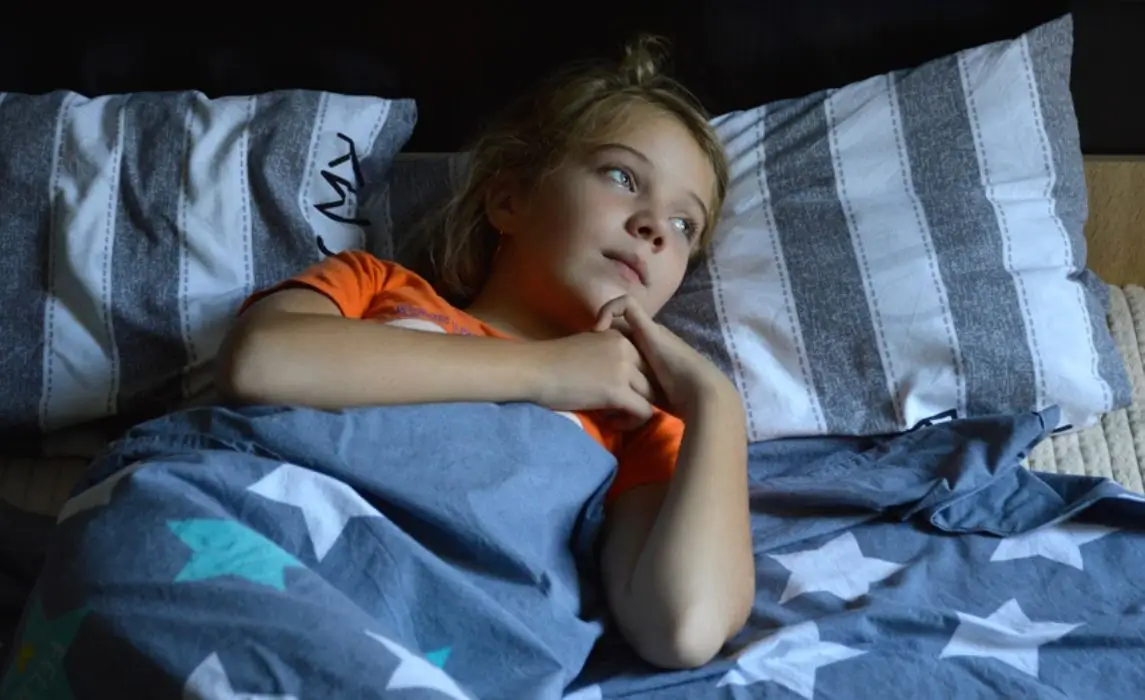
Getting children to wind down and fall asleep is one of the most common challenges parents face and one of the most solvable, with the right approach.
A bedtime routine is simply a short series of calming activities done before sleep, in roughly the same order every night. No need to be fancy or time-consuming. What makes it work is not what is in the routine, but the consistency of repeating it. When children know what to expect, their bodies and minds begin to relax before they even reach the pillow.
Why Bedtime Routines Actually Work
Children thrive on predictability. Their developing brains are constantly processing new information, and uncertainty, even minor uncertainty about what happens next, can keep them alert and unsettled. A consistent bedtime routine removes that uncertainty. It sends a clear message to the brain and body: sleep is coming. This allows the nervous system to begin shifting into a calmer state well before your child's head hits the pillow.
Research consistently supports what many parents discover on their own. Children who follow a regular bedtime routine tend to fall asleep faster, sleep for longer stretches, and wake less frequently during the night. Over time, they also show improvements in mood and behavior during the day likely because they are better rested and feel more emotionally regulated.
What a Good Routine Looks Like
Consistent - Same activities, same order, same time each night. Repetition is what trains the brain to associate the routine with sleep.
Simple - Three to four steps is enough. A routine that is too long or complicated becomes difficult to sustain and can itself become a source of stress.
Calm - Dimmer lights, quieter voices, and activities that slow the body and mind rather than excite them. . Think of bedtime as a gradual dimming, not a sudden switch.
How to Build Your Routine: A Step-by-Step Guide
Building a bedtime routine does not require perfection on the first try. Start simple, stay consistent, and adjust as you learn what works for your child.
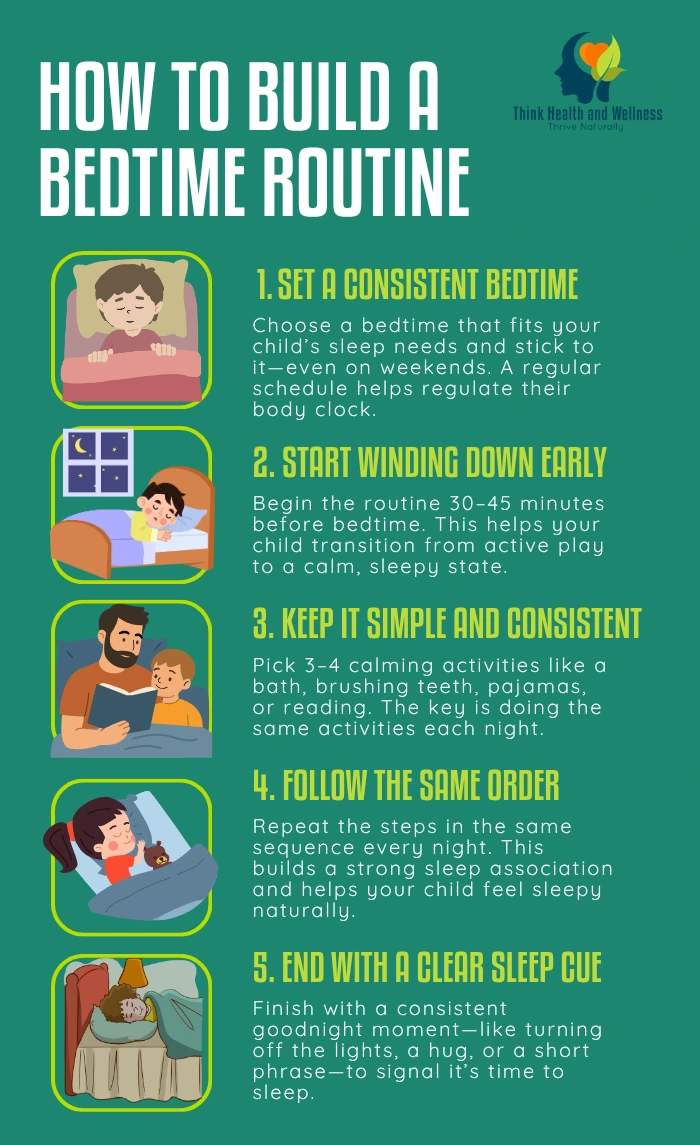
Step 1: Choose a consistent bedtime
Pick a bedtime that allows your child to get the amount of sleep appropriate for their age and stick to it as closely as possible, including on weekends. A consistent wake time and bedtime helps regulate your child's internal clock, making it easier for them to feel sleepy at the right time each night.
Step 2: Start the wind-down early
Begin the routine 30 to 45 minutes before you want your child asleep. Trying to go from full activity to sleep in just a few minutes rarely works. Give both of you enough time to transition without rushing.
Step 3: Choose 3–4 core activities
Select a small number of calming steps that fit your family's lifestyle. More on specific activity ideas in the next section, but common examples include a bath, brushing teeth, putting on pajamas, and reading together. The activities matter less than the consistency of doing them.
Step 4: Keep the order the same
Once you have your steps, do them in the same sequence every night. This repetition is what builds the association between the routine and sleep. Over time, your child will begin to feel sleepy as the routine progresses before they even reach the final step.
Step 5: End with a clear sleep cue
The final step of the routine should be the moment you say goodnight. This might be turning off the light, a specific cuddle or hug, a goodnight phrase you use every time, or a quiet lullaby. This clear endpoint helps your child understand that the routine is complete and it is time to sleep.
Quick Reminder: Routines do not need to be elaborate or creative to be effective. The most powerful routines are the ones your family can actually repeat every single night.
Calming Activities to Include
There are many ways to fill those 30 to 45 minutes of wind-down time. The goal is to choose activities that feel soothing and enjoyable for your child, while still guiding them toward a sleepy state. Here are some of the most effective options:
A warm bath or gentle wash-up. Warm water is naturally relaxing and the shift from bath to cooler bedroom air helps signal the body that sleep is near.
Brushing teeth and washing up. Including hygiene in the routine makes it a habit, and the quiet, repetitive nature of the task is itself calming.
Changing into pajamas. This physical transition marks the shift from day to night and can become a meaningful ritual in itself.
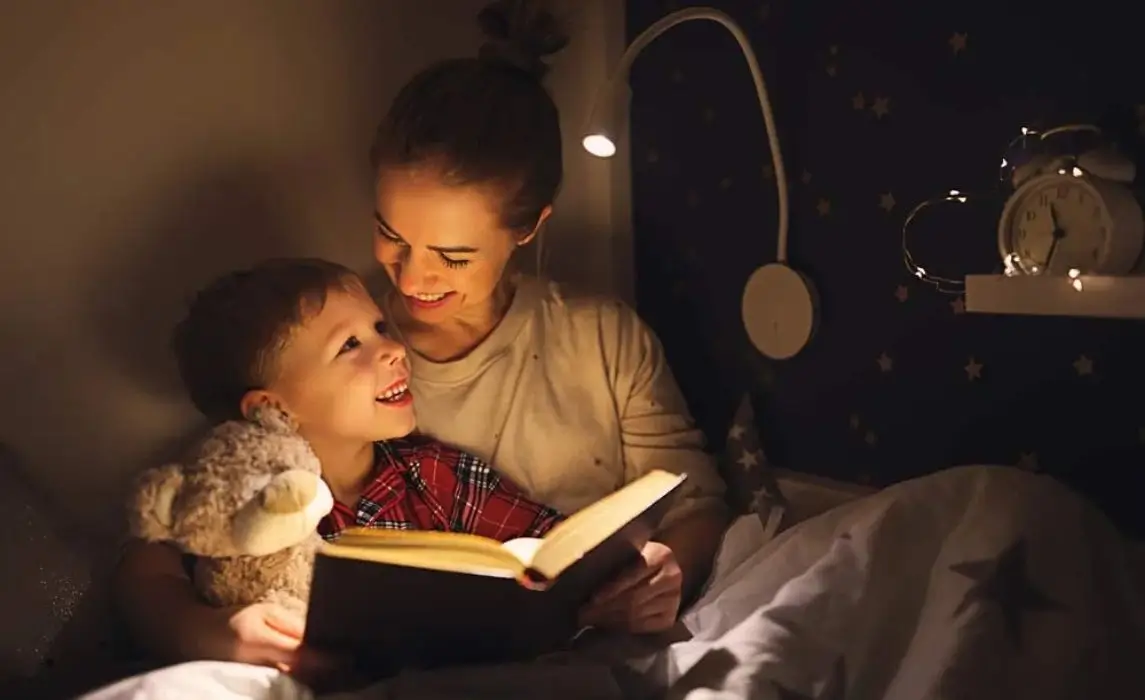
Reading together. Storytime is one of the most beloved and effective bedtime activities. It is calm, connection-building, and stimulates imagination without overstimulating the body.
Soft music or lullabies. Gentle background music or a sung lullaby can ease the transition to sleep and become a powerful sleep cue over time.
A short cuddle or quiet conversation. A few minutes of gentle, unhurried connection — talking about the day, sharing something you love about your child — can help them feel safe and settled.
Simple breathing exercises. For older toddlers and school-age children, a few slow deep breaths or a simple breathing exercise can be a surprisingly effective calming tool.
Light stretching or gentle yoga poses. A few slow, simple stretches help release physical tension from a busy day.
Quiet drawing or coloring (for older children). If your child is not yet tired, a few minutes of calm, quiet activity can be a helpful bridge to sleep, provided it stays low-stimulation.
Choose what feels natural and sustainable for your family. You do not need to use all of these — three or four well-chosen activities, done consistently, are more than enough.
What to Avoid Before Bed
Even the most thoughtfully designed bedtime routine can be undermined by what happens in the hour before it begins. Certain activities and habits are known to make it significantly harder for children to fall asleep, and being aware of them is just as important as knowing what to include.
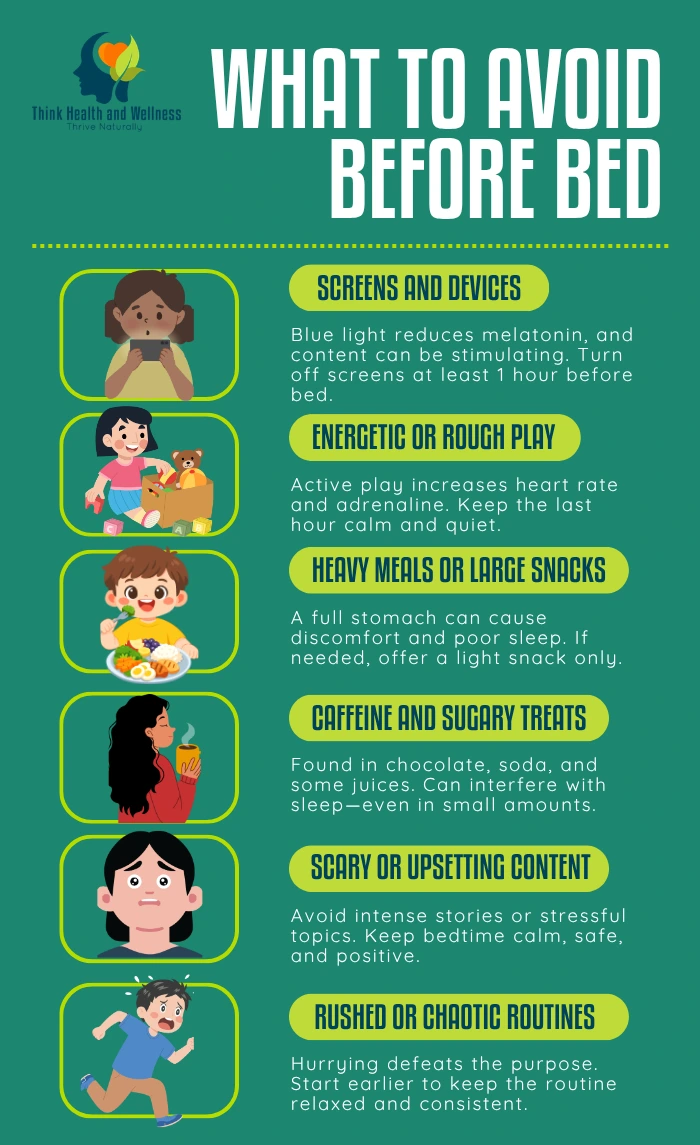
Screens and devices - The blue light emitted by phones, tablets, and televisions suppresses the production of melatonin, the hormone that signals the body to prepare for sleep. Beyond the light itself, the content on screens — games, videos, social media — tends to be stimulating rather than calming. Aim to turn off all screens at least an hour before bedtime.
Energetic or rough play - Wrestling, chasing, or any physically exciting play raises heart rate and adrenaline, making it much harder to settle. Spend the last hour before bed in a calm, quiet way.
Heavy meals or large snacks - Sleeping on a full stomach may lead to discomfort and poor sleep. If your child is hungry before bed, a small, light snack is fine — but avoid large meals close to bedtime.
Caffeine and sugary treats Chocolate, cola, and many fruit juices contain caffeine or large amounts of sugar that can interfere with sleep. Even small amounts can affect sensitive children.
Scary stories or upsetting content - This includes intense books, news, or conversations about stressful topics. The bedtime routine should feel emotionally safe and positive.
Rushed or chaotic routines - Even if the activities themselves are appropriate, doing them in a frantic, hurried way defeats the purpose. If you find yourself rushing through the steps, consider starting the routine 10 to 15 minutes earlier.
Adapting the Routine by Age
A bedtime routine is not one-size-fits-all. The core principles remain the same at every age — consistency, calm, connection — but the length and content of the routine should evolve as your child grows.
Toddlers (ages 1–3): Aim for a routine of around 20 to 30 minutes. Toddlers need a great deal of comfort and reassurance, and they respond well to simple, predictable steps. Offer limited choices within the routine — which pajamas to wear, or which book to read — to give them a sense of control while you maintain the structure. Transitions can be challenging at this age, so use gentle warnings: "After this bath, we will read one book and then it will be time to sleep."
Preschoolers (ages 3–5): A routine of 30 to 40 minutes works well for most preschoolers. Children this age love to feel involved, so let them help pick the book, lay out their pajamas, or decide the order of one or two steps. A simple visual checklist of the routine's steps — even with pictures for non-readers — can be a wonderful tool, giving them a sense of ownership and reducing resistance.
School-age children (ages 6–10): Allow 30 to 45 minutes, and give older children more responsibility for managing parts of the routine themselves — getting their own pajamas, brushing their teeth without reminders, or choosing their reading for the night. You may also find that the activities shift: reading independently, journaling, or quiet drawing may replace the picture books of earlier years. The routine may look different, but the predictable wind-down structure remains just as valuable.
Handling Common Bedtime Challenges
Bedtime resistance and stalling
This is extremely common, especially in children who feel they are missing something by going to sleep. Offering limited, genuine choices within the routine gives children a sense of control that often reduces the push-back. A visual checklist can also help — when a child can see and check off each step themselves, bedtime becomes something they complete rather than something done to them. Stay calm and firm; children look to parents to set the boundary with warmth but without negotiation.
Separation anxiety
A comfort object — a stuffed animal, a special blanket — can be a powerful bridge between you and your child when you leave the room. A brief, consistent goodbye ritual (a hug, a specific phrase, a kiss on the forehead) helps your child know exactly what to expect when you leave. Avoid extended, drawn-out goodbyes, which can actually increase anxiety rather than soothe it.
Nighttime fears
Fear of the dark or of being alone is developmentally normal, especially in preschoolers. A small nightlight can help enormously. Acknowledge your child's feelings without dismissing them or amplifying them — "I understand it feels scary, and you are safe" is more helpful than either "there is nothing to be afraid of" or a lengthy investigation of every fear. A consistent, calm routine that ends with your child feeling loved and secure is itself a powerful antidote to nighttime anxiety.
Here is a simple, ready-to-use bedtime routine that works for most families with children aged 3 to 8. Feel free to adjust the steps and timing to fit your family's needs.
30–40 minutes before sleep:
Dim the lights in your child's room and throughout the house.
Bath or wash-up (10 minutes).
Brush teeth and put on pajamas (5 minutes).
Read one or two books together (10–15 minutes).
A short cuddle, quiet chat, or three slow deep breaths together (3–5 minutes).
Goodnight phrase or song, then lights out.
For toddlers: Shorten the reading to one book, add an extra cuddle, and keep the routine to about 20 minutes. The simpler, the better.
For older children (8+): Allow them to read independently in bed for 15 minutes before lights-out. The independent reading replaces the read-aloud, but the structure remains.
You do not need to build the perfect bedtime routine. You just need one that is calm, predictable, and repeatable — one that helps your child feel safe, loved, and ready for sleep.
If bedtime has been a struggle in your home, the good news is that even small changes can make a meaningful difference. Start with one or two consistent steps. Add a clear goodnight signal. Reduce screens in the hour before bed. Give it a couple of weeks. You may be surprised by how quickly both you and your child begin to look forward to this quiet, unhurried time together at the end of each day.
The goal is not a perfect routine. The goal is a good enough routine, repeated with love and consistency. That is more than enough.
How to Build a Calming Bedtime Routine for Kids Frequently Asked Questions
How do I create a calming bedtime routine for my child?
Start with three to four simple calming activities, such as a bath, brushing teeth, putting on pajamas, and reading together. Keep the steps in the same order each night so your child begins to associate the routine with sleep.
How long should a bedtime routine for kids be?
A bedtime routine usually works best when it lasts about 20 to 45 minutes, depending on your child’s age. Younger children often do well with a shorter routine, while older kids may need a little more time to fully wind down.
What are the best calming activities before bed for kids?
Some of the best bedtime activities include reading, soft music, cuddling, gentle breathing, light stretching, and quiet conversation. Choose activities that help your child feel safe, relaxed, and ready for sleep.
What should children avoid before bedtime?
Children should avoid screens, rough play, heavy meals, sugary snacks, caffeine, and scary or upsetting content before bed. These can make it harder for the body and mind to settle into sleep mode.
What can I do if my child resists bedtime or feels scared at night?
Stay calm and consistent while offering small choices within the routine, such as picking pajamas or choosing a book. For nighttime fears, a comfort item, nightlight, and a short reassuring goodnight ritual can help your child feel more secure.
Related posts
Lorem ipsum dolor sit amet, consectetur adipiscing elit.