Help Your Kid Fall Asleep Fast: Bedtime and Sleep Tips for Children
Published on
June 9, 2026
Author
Claudia Fournier
Project Writer | As a devoted writer at ThinkHealth and Wellness, Claudia shares evidence-based insights into natural health, providing balanced reviews of products and promoting a holistic lifestyle. Her creativity shines through in health narratives, and she brings diverse cultural perspectives to the wellness landscape. Claudia is committed to combating health misinformation, ensuring ThinkHealth and Wellness remains a trusted source for reliable and well-researched content.
Can music and movement help fine motor skills?
Yes—finger plays, clapping games, and dance routines that use hand gestures all help. Combine rhythm and repetition for deeper learning.
How can educators encourage home practice?
Send home simple activity ideas, kits, or worksheets. Offer short instructions and encourage family involvement. Regular practice builds lasting progress.
What crafts are best for fine motor practice?
Try origami, sticker scenes, stringing pasta, or painting with Q-tips. Crafts that use small pieces build precision and control.
Bedtime struggles are one of the most common complaints parents have, and more often than not, the problem isn't just getting kids to bed. It's getting them to actually fall asleep once they're there.
For most children, slow sleep onset isn't a medical problem. It's a habit problem, and that means it's fixable. With the right routines, environment, and a little consistency, most kids can learn to fall asleep faster without relying on melatonin gummies or elaborate bedtime negotiations.
1. Screens Before Bed Are A Real Problem
This one is probably not news to you, but it's worth understanding exactly why screens cause so much trouble at bedtime, because it goes beyond just the content.
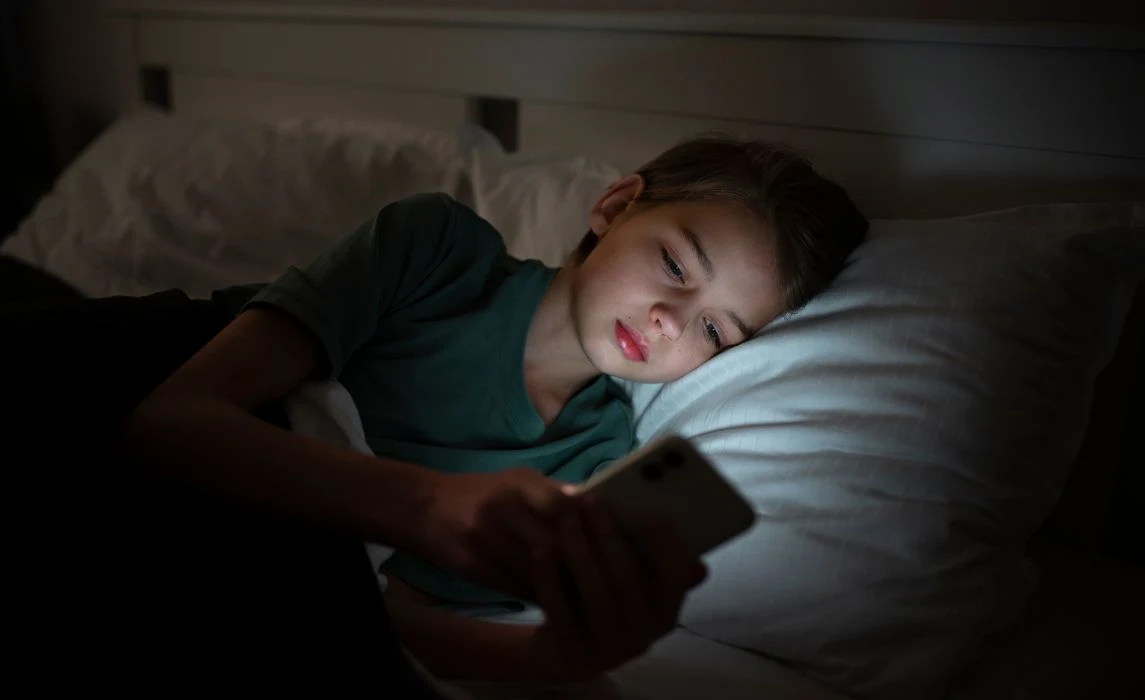
Blue light, the kind emitted by phones, tablets, computers, and TVs, actively suppresses melatonin production. When your child's eyes are exposed to it in the hour or two before bed, their brain reads it as a signal that it's still daytime and holds off on starting the wind-down process. That alone can push back natural sleep onset by 30 to 90 minutes.
On top of that, most screen content is designed to be stimulating. Games, YouTube videos, social media, even some kids' shows are built to keep your child's attention and keep them engaged. That's the exact opposite of the mental state they need to fall asleep.
The general recommendation is to cut screens off at least 60-90 minutes before bed. Yes, that's a significant chunk of the evening, and yes, there will probably be pushback at first. But most parents who stick with it consistently report noticeable improvements in how quickly their kids settle and fall asleep within a couple of weeks.
2. Setting up the right sleep environment for your child
The bedroom itself plays a bigger role in sleep speed than most people realize. Here are the main things worth paying attention to.
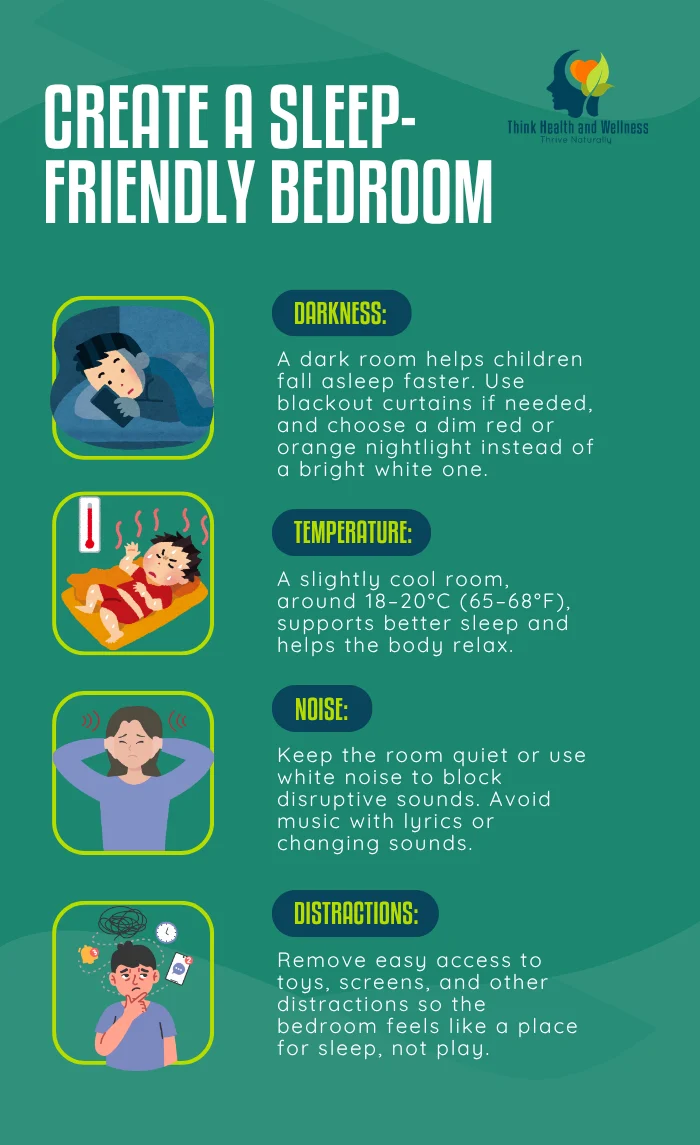
Darkness. The brain's melatonin production responds to light levels, so a darker room genuinely helps kids fall asleep faster. Blackout curtains are worth the investment if streetlights or early sunrise are an issue. If your child is afraid of complete darkness, a very dim red or orange nightlight is a better choice than a bright white one, since warmer light has less of an impact on melatonin.
Temperature. A slightly cool room (somewhere around 18 to 20 degrees Celsius or 65 to 68 degrees Fahrenheit) supports better sleep than a warm one. The body's core temperature naturally drops as part of the sleep process, and a cooler environment helps that happen faster.
Noise. Some kids sleep fine with a bit of background noise; others need it quiet. If outside noise is a problem, a white noise machine or a simple fan can mask disruptive sounds without being stimulating. Avoid music with lyrics or anything with too much variation in sound.
Distractions. If your child has toys, devices, or other interesting things easily accessible in their bedroom, those become competition for sleep. Keeping the bedroom primarily a sleep space helps the brain associate it with rest rather than play.
3. Physical activity helps, but timing matters
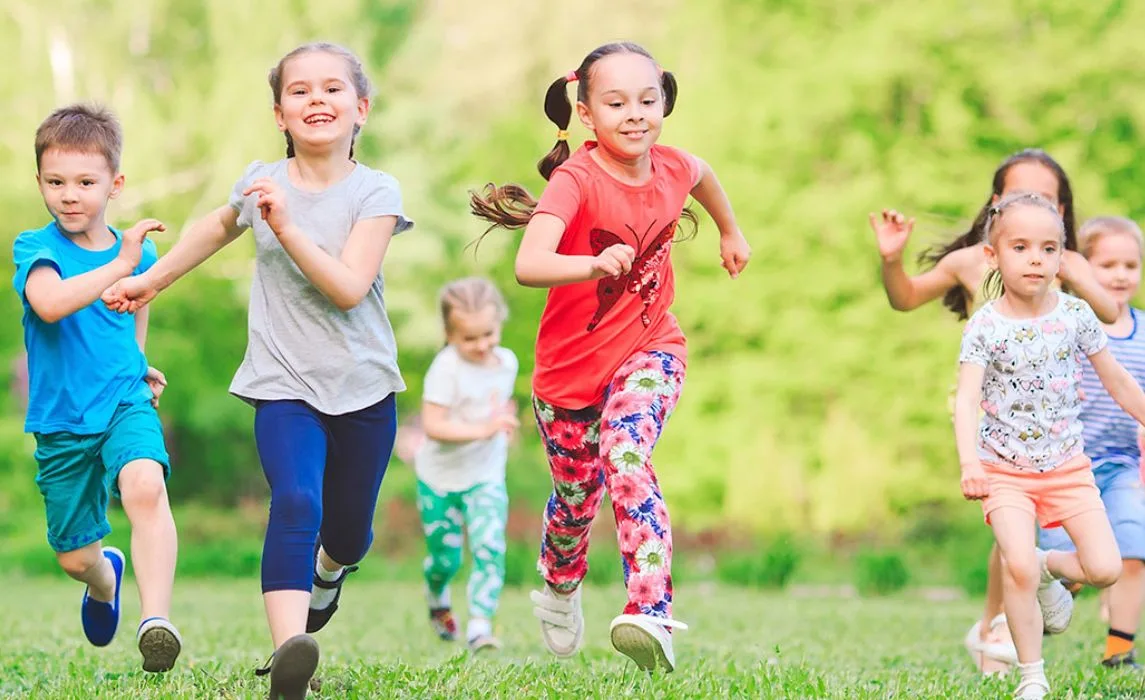
Kids who are physically active during the day tend to fall asleep faster at night. Exercise increases sleep pressure and helps regulate the body's internal clock. The catch is timing.
Vigorous physical activity in the two to three hours before bedtime can actually make it harder to fall asleep because it raises alertness and body temperature, both of which work against sleep onset. So if your child has sports practice, gymnastics, or a high-energy activity in the evening, give them extra wind-down time afterward and keep the pre-bed routine especially calm.
Earlier in the day, though, active outdoor play is genuinely one of the best things you can do for kids' sleep.
4. Watch what they eat and drink in the evening
A few dietary habits can quietly undermine sleep onset without parents realizing it.
Caffeine is an obvious one, but it hides in more places than just soda. Chocolate, some flavored waters, energy drinks, and certain teas all contain caffeine. For younger kids especially, even a small amount in the afternoon can affect nighttime sleep.
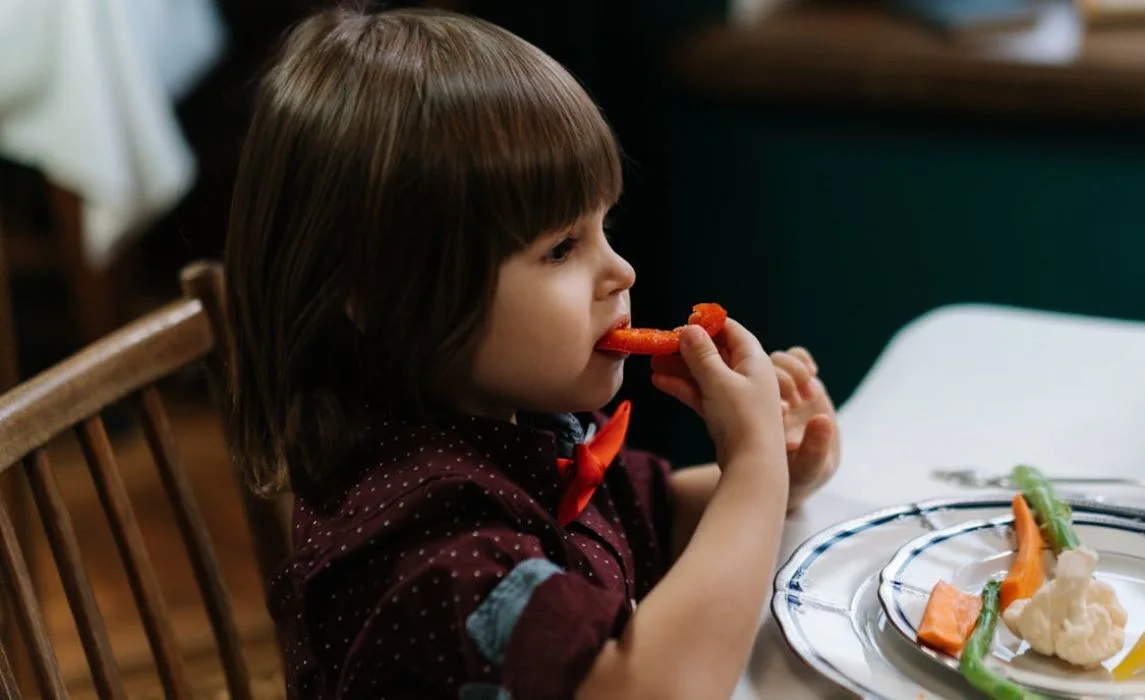
Heavy meals or lots of sugar close to bedtime can also cause restlessness. If your child is hungry before bed, a small snack with some protein and complex carbohydrates (like peanut butter on whole grain crackers or a small bowl of oatmeal) is a better option than sweets.
And naps: while younger children definitely still need them, naps that run too long or too late in the day can reduce sleep pressure at night and make it harder for kids to fall asleep at their normal bedtime. If you're struggling with sleep onset, it's worth looking at whether afternoon nap timing needs adjusting.
5. The sleep association problem
Sleep associations are the conditions your child has learned to need in order to fall asleep. If a toddler has always been rocked to sleep, or a child has learned to fall asleep with a parent lying next to them, those associations become part of how their brain expects sleep to happen.
This matters because sleep associations don't just affect the initial process of falling asleep. They also affect what happens when a child wakes briefly in the night, which everyone does, multiple times. If the conditions that were present at bedtime are no longer there (the parent has left, the rocking has stopped), the child may fully wake and struggle to fall back asleep, which then requires parental intervention again.
Gradually shifting toward independent sleep associations, things like a comfort object, a consistent routine, or white noise, helps children develop the ability to settle themselves both at bedtime and during normal nighttime waking.
6. Be Consistent
Sleep habits don't change overnight, and progress is rarely perfectly linear. There will be nights where the routine falls apart because of travel, illness, late events, or just a hard day. That's fine. What matters is getting back to the routine as quickly as possible afterward.
Improvements in sleep onset time typically happen gradually over two to four weeks of consistent changes. Keep going, even if results aren’t immediate. The consistency itself is what creates the change.
The Bedtime Routine Is More Important Than You Think
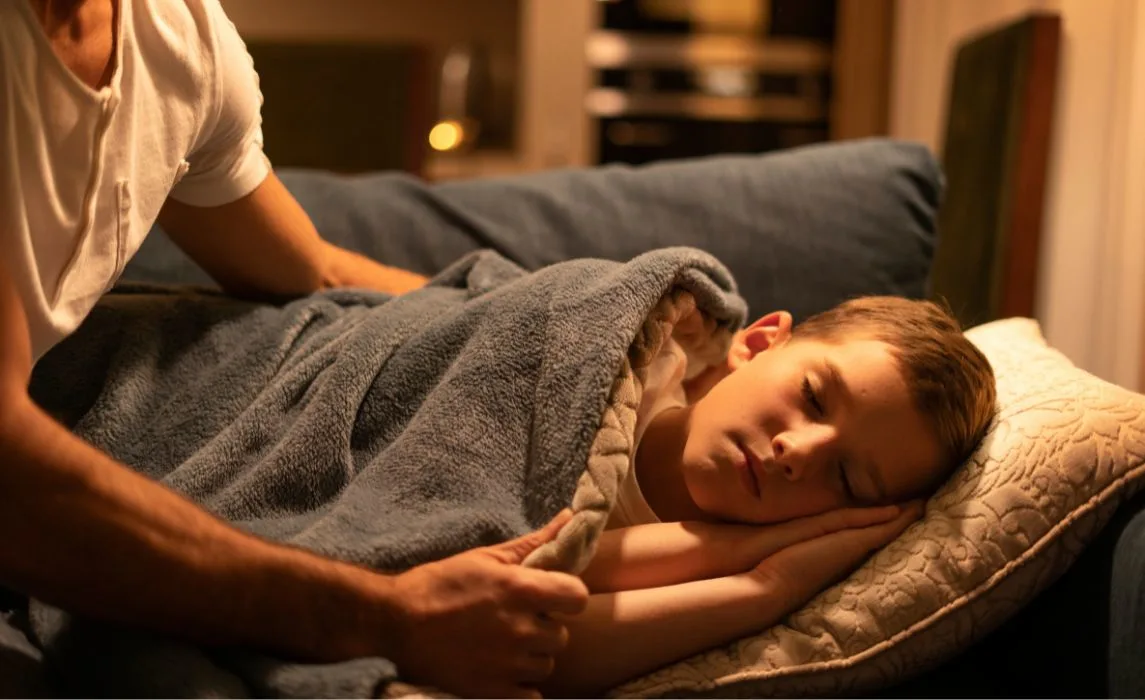
If there's one thing that makes the biggest difference in how fast kids fall asleep, it's having a consistent bedtime routine. Not just a loose idea of one, but an actual predictable sequence of events that happens the same way, at the same time, every night.
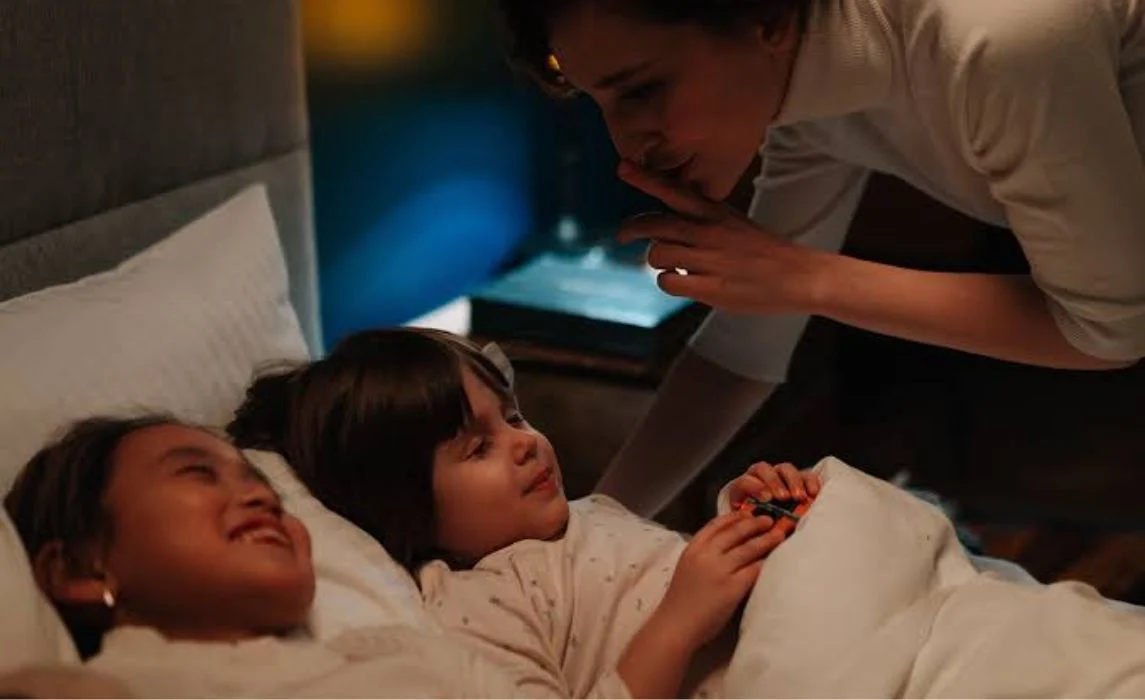
The brain is very good at picking up on patterns. When a child does the same calming activities in the same order night after night, those activities start to become sleep cues. A good routine should last about 20 to 30 minutes. Avoid anything that gets kids hyped up, whether that's roughhousing, exciting TV shows, or checking their tablet.
Some practical routine ideas that work well across different ages:
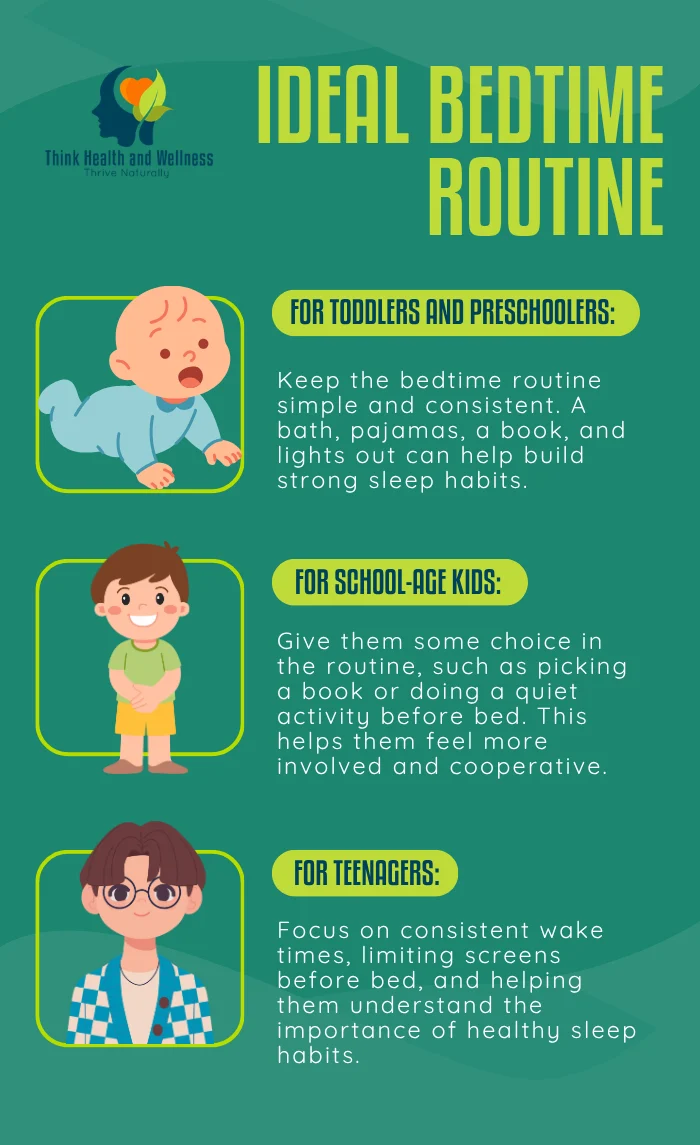
For toddlers and preschoolers: Keep it simple and predictable. Bath, pajamas, one or two books, a short song, lights out. Toddlers thrive on ritual, so the more consistent you are, the faster they'll start to associate the routine with sleep.
For school-age kids: Give them a bit more ownership. Let them pick the book, choose their pajamas, or have a few minutes of quiet journaling or drawing before bed. Kids this age do better when they feel like they have some control over the process.
For teenagers: This age group is tricky because their internal clock naturally shifts later, making it genuinely harder for them to feel sleepy at a "normal" bedtime. Help them understand the science behind sleep, keep screens out of the bedroom, and focus on consistent wake times rather than battling over when they go to bed.
Dealing With Bedtime Resistance and Stalling
Most parents know the stalling tactics well: "I need water," "I have to tell you something," "I'm scared," "my leg hurts," and so on. Some of it is genuine, but a lot of it is avoidance.
A few things that help:
Set clear expectations about what happens after lights-out and stick to them. If you allow one trip to the bathroom and one glass of water, honor that, but hold the line after.
A bedtime pass can be surprisingly effective for younger kids. The idea is that your child gets one physical "pass" they can hand over in exchange for one post-bedtime request (a hug, a glass of water, etc.). Once it's used, it's gone for the night. Research on this approach has shown it reduces curtain calls significantly while still giving kids a sense of control.
Respond to delayed requests briefly and calmly, without engaging in conversation or letting the interaction stretch out. The goal is to keep any post-bedtime contact short and boring, so there's no reward for stalling.
Why Kids Take So Long To Fall Asleep
Before we get into solutions, it helps to understand what's actually going on. Falling asleep isn't just about being tired. It's about the brain transitioning from an alert, active state to a calm, relaxed one. That shift is driven by a hormone called melatonin, which the body starts producing naturally when it gets dark and things quiet down.
The problem is that a lot of modern childhood habits actively work against that process. Bright screens, stimulating content, irregular schedules, sugar, and high-energy play right before bed all keep the brain in "go mode" longer than it needs to be. Add in some bedtime anxiety or a few nights of inconsistent routines, and you've got a kid who's lying in bed wide awake at 9:30 pm while you're exhausted on the other side of the door.
The brain needs clear, consistent signals that it's time to wind down. When those signals aren't there, or when they're competing with overstimulation, sleep onset gets delayed. And the longer it keeps happening, the more ingrained the pattern becomes.
Most kids who struggle to fall asleep do so because of behavioral and environmental factors, not medical ones. But there are situations where it's worth getting a professional involved.
Talk to your child's pediatrician if you're seeing any of the following:
Persistent inability to fall asleep after consistent routine changes over several weeks
Loud snoring, gasping, or pauses in breathing during sleep (possible signs of sleep apnea),
Excessive daytime sleepiness that affects their functioning
Extreme or escalating bedtime anxiety or fear, or signs of restless legs such as uncomfortable sensations in the legs that make it hard to stay still at night.
A sleep specialist or pediatrician can help rule out underlying conditions and provide more targeted support if standard approaches aren't working.
Helping your child fall asleep faster is less about finding the perfect trick and more about creating the right conditions, consistently. A predictable wind-down routine, a screen-free hour before bed, a dark and cool bedroom, and some patience with the process will get most kids sleeping better than any shortcut ever will.
It takes a few weeks to see real change, but once the habits are there, bedtime gets a lot easier for everyone. And getting your evenings back? Absolutely worth the effort.