When Do Kids Start Walking: 6 Early Signs Your Baby Is Learning to Walk
Published on
June 23, 2026
Author
Claudia Fournier
Project Writer | As a devoted writer at ThinkHealth and Wellness, Claudia shares evidence-based insights into natural health, providing balanced reviews of products and promoting a holistic lifestyle. Her creativity shines through in health narratives, and she brings diverse cultural perspectives to the wellness landscape. Claudia is committed to combating health misinformation, ensuring ThinkHealth and Wellness remains a trusted source for reliable and well-researched content.
Can music and movement help fine motor skills?
Yes—finger plays, clapping games, and dance routines that use hand gestures all help. Combine rhythm and repetition for deeper learning.
How can educators encourage home practice?
Send home simple activity ideas, kits, or worksheets. Offer short instructions and encourage family involvement. Regular practice builds lasting progress.
What crafts are best for fine motor practice?
Try origami, sticker scenes, stringing pasta, or painting with Q-tips. Crafts that use small pieces build precision and control.
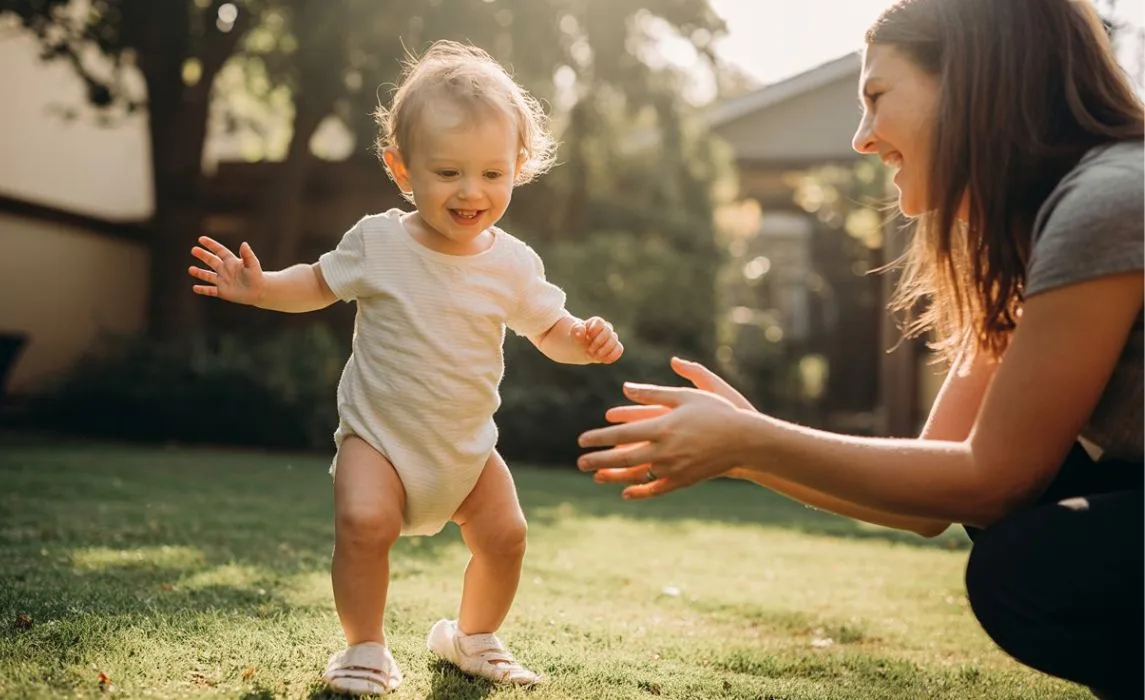
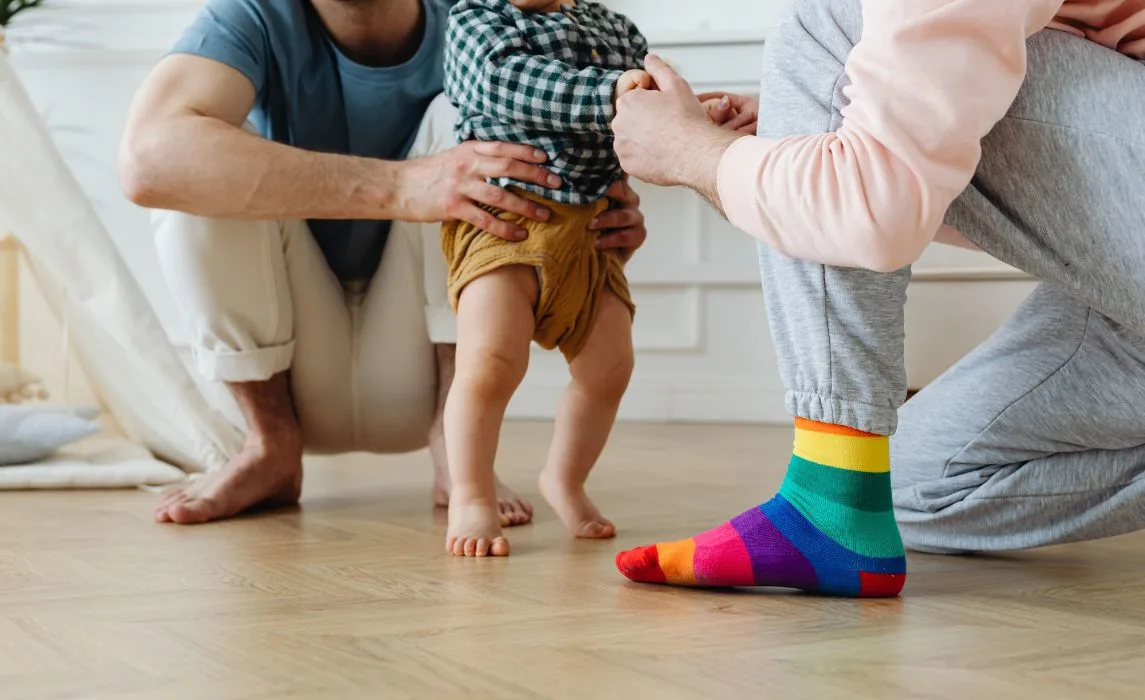
There's something about watching your baby take their first wobbly, independent steps that feels almost surreal. One moment they're scooting across the floor on their belly, and the next they're upright and unstable, grinning like they just discovered fire. It's one of those parenting moments you'll probably remember forever.
But the path to those first steps looks very different from every child. If your baby is 14 months old and still happily crawling while your friend’s child started walking at 10 months, it’s natural to wonder if something is wrong. Spoiler: it almost certainly isn't.
Most children take their first independent steps between 8 months and 18 months of age, with many starting around 12 months. That's a ten-month window, which is enormous. Understanding where your child falls within that range, and what factors may affect their progress, can help ease unnecessary worry during this major milestone.
Average Age Babies Start Walking
It usually happens between 8 and 15 months of age, though some children may reach it closer to 18 months—and both ends of that range are completely normal.
The 12-month birthday tends to get treated like a walking deadline, but it really shouldn't be. It's just the average, which means roughly half of babies walk before that point and half walk after. A baby who takes their first steps at 9 months and one who walks at 17 months are both developmentally on track.
A few factors play into the timing:
Temperament: Some babies are natural risk-takers who throw themselves into new physical challenges headfirst. Others are more cautious and prefer to get very confident at each stage before moving on. Neither approach is wrong; they just produce different timelines.
Muscle tone and body type: Babies with lower muscle tone may need a little more time to build the core and leg strength needed for walking. Heavier babies may also take longer, as their developing legs have more weight to support.
How much floor time they get: Babies who spend a lot of time in bouncers, swings, or car seats have fewer opportunities to build the strength and coordination that eventually leads to walking. More floor time generally means faster motor development.
Whether they were premature: If your baby was born early, their developmental milestones are typically adjusted to their corrected age, not their birth date. A baby born two months early who is 13 months old is really closer to 11 months developmentally.
Individual variation: Sometimes there's no specific reason at all. Some kids just walk later. That's genuinely okay.
Signs Your Baby Will Walk Soon
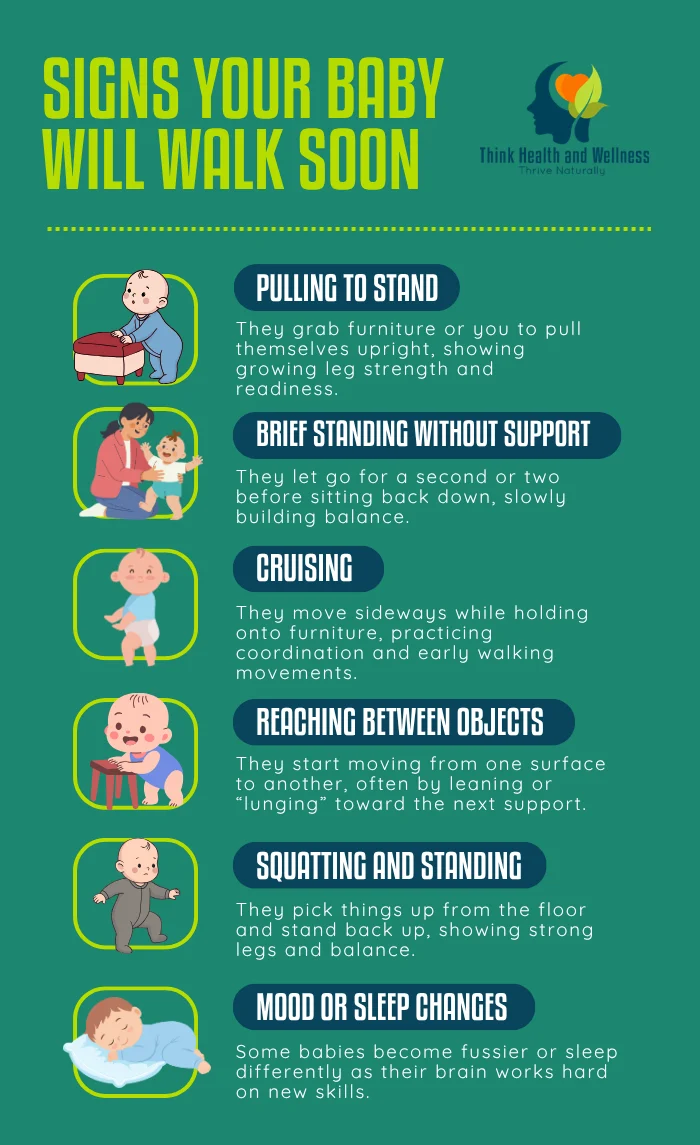
Before independent walking comes a whole sequence of smaller victories that tell you your baby's body is getting ready. Here's what to watch for in the weeks or months before those first solo steps:
1. Pulling up to stand
Your baby grabs the edge of the coffee table, the couch, your leg, anything stable, and hauls themselves upright. This is huge. It means your baby is ready to walk because they already have enough leg strength and motivation to get vertical.
2. Standing briefly without support
They let go for a second or two before plopping back down. Each day, that window gets a little longer. Some babies practice this obsessively; others barely do it before they just start walking.
3. Start Cruising
This is the term for when babies shuffle sideways along furniture, holding on with their hands. They might go back and forth along the couch a hundred times a day. It may look like a slow, careful sidestep, but it’s actually your baby’s way of practicing how to walk.
4. Reaching between objects
Once they feel more confident, they begin letting go of one surface and reaching toward another. That gap between the couch and the ottoman becomes their first "step." It's usually a lunge more than a step, but the concept is the same.
5. Squatting and standing back up
This one is easy to miss, but it's a sign of real strength. A baby who can crouch down, pick something up off the floor, and stand back up again has the balance and leg power that walking requires.
6. Fussiness or sleep changes
A lot of parents notice that their baby gets crankier right before a big motor milestone. The brain is doing a lot of work, and that can throw off sleep and mood temporarily.
The Stages That Build Up to Walking
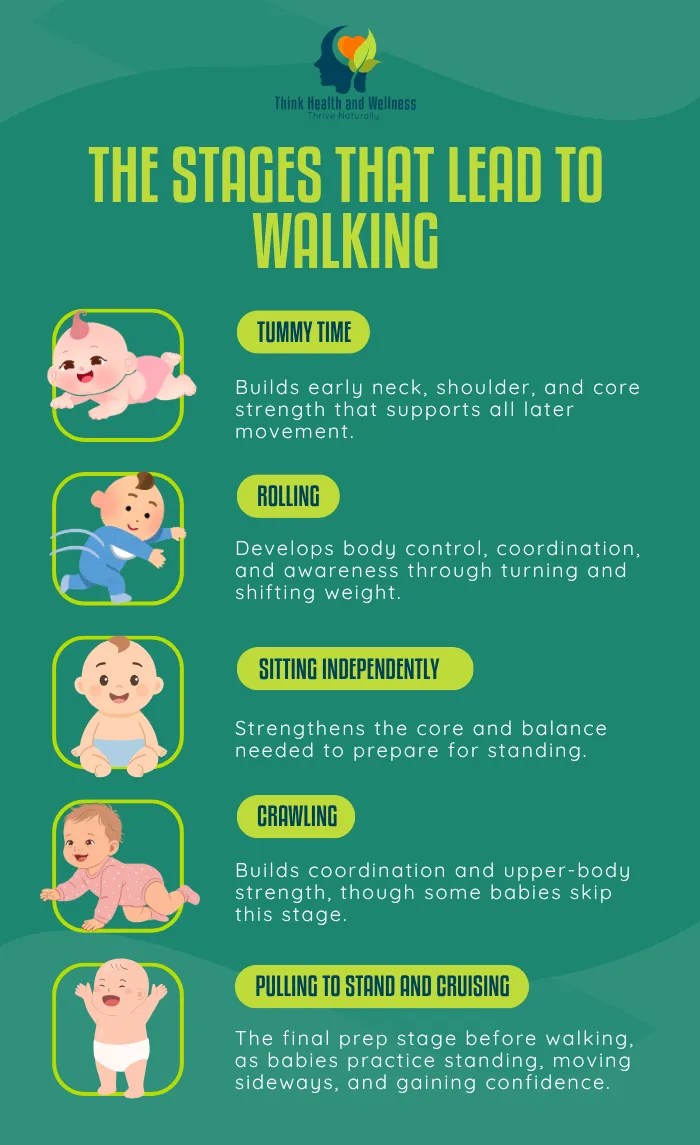
Walking doesn't happen in isolation. It's the product of months of physical development, and each stage builds on the last.
Tummy Time
This starts in infancy. It builds the neck, shoulder, and core strength that everything else depends on. Babies who get regular tummy time from early on tend to hit subsequent big milestones a bit earlier.
Rolling
Learning to roll, both front to back and back to front, develops the rotational strength and body awareness that supports later movements.
Sitting Independently
Sitting without support requires significant core stability. Once your baby can stay upright without support, they’re starting to build the stability needed for standing.
Crawling
If your baby has bypassed crawling, that's not automatically a red flag. However, crawling does develop cross-body coordination and upper body strength that's genuinely useful, so if your baby is showing interest in it, encourage it.
Pulling Themselves Up To Stand And Cruising
This is the stage right before independent walking. Most babies spend weeks or even months cruising before they let go and take those first real steps.
These stages don't always happen in a perfectly linear order. The time spent at each stage varies enormously. Some babies crawl for a few weeks; others crawl for six months. There's no "right" amount of time to spend at any stage.
How to Help Your Baby (Without Pushing)
There's a difference between creating good conditions to support your baby's development and pressuring them to hit a milestone before they're ready. The former is helpful; the latter mostly just stresses you out without changing the timeline.
Here's what actually works:
Prioritize floor time: Get your baby out of bouncers and carriers and onto the floor as much as possible. A play mat with interesting toys scattered around gives them plenty of incentive to move. The floor is where all the motor magic happens.
Get down at their level: Sit on the floor with them. Place yourself or an interesting toy just out of reach and let them figure out how to get to you. Motivation is a powerful driver of physical development.
Offer stable things to pull up on: Make sure your furniture is safe for a baby to grab and haul themselves up on. Avoid anything that might tip. Some parents put a low, sturdy ottoman or a wooden activity cube in the middle of the room so babies can practice pulling up without being stuck near the wall.
Try a push toy: Once they cruise around and can stand briefly, a sturdy push toy (the kind with a wide base that doesn't tip easily) can help them practice walking with a little support. Supervise this closely and make sure the toy is actually sturdy enough not to shoot out from under them.
Cheer the small wins: Babies respond to your enthusiasm. When they pull up or take a lurching step, make a big deal of it. That positive feedback has good effect in your baby's confidence and encourages them to keep trying.
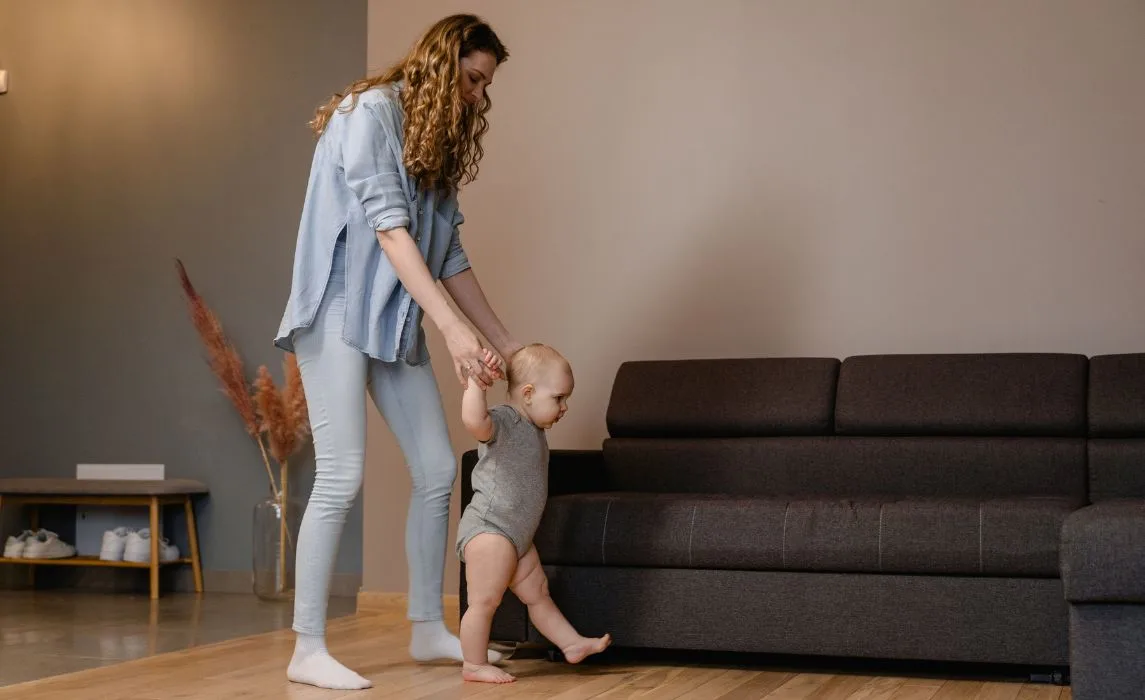
Let them fall (safely): You don't always need to hold their hands. Falling is part of the process. A baby who never falls never learns how to balance. Obviously, you want to protect them from serious injury, but a tumble onto carpet from standing height is normal and survivable. Try not to react with panic when they fall; your calm reaction teaches them that falling is just part of learning.
Shoes, Barefoot, and Safety Tips
This is one area where a lot of parents have it backwards. You do not need to put shoes on them to help your baby learn to walk. In fact, barefoot is better.
When babies walk without shoes, they can feel the ground through their feet. That sensory feedback helps them figure out how to balance. Thick-soled shoes muffle that feedback and can actually make walking harder. Inside the house, bare feet is ideal. If you want some traction on slippery floors, grip socks work well.
Putting on shoes for your baby are only necessary when going outside, keeping feet warm in cold weather, or protecting against rough surfaces. When you do get shoes for an early walker, look for flexible soles, a wide toe box, and a secure fit. Skip anything stiff or with a significant heel.
One very important safety note: skip the baby walkers (the sit-in devices with wheels that babies push around with their feet). They reportedly cause injuries every year from falls down stairs, and research actually suggests they can delay walking by reducing babies' motivation to figure out independent locomotion. They're banned in Canada for a reason. Push toys that babies walk behind are a different story and are generally fine with supervision.
Childproofing and safe environment also becomes urgent right around this stage. A cruising and standing baby may start holding onto things you wouldn't expect. Low shelves, coffee table corners, and unsecured furniture that could tip all need to be addressed before your baby is mobile.
When to Talk to Your Doctor
Most late walkers are just that: late walkers who will be running in a few months with no lasting effects. But there are some situations where it's worth checking in with a health professional:
Your baby is not walking by 18 months: This is the typical guideline most pediatricians use. If your baby's first steps are still not showing by 18 months, it's time for an evaluation. This doesn't mean something is definitely wrong; it just means it's worth looking into.
They were walking and then stopped: Regression in motor skills is worth taking seriously. If your baby was walking and then stopped, or significantly regressed, mention it to your doctor promptly.
They can't bear weight on their legs: If your little one consistently refuses to put weight on their legs or seems to be in pain when they try, that warrants a call to the doctor regardless of their age.
Their gait looks unusual: A bit of wobbliness is completely normal in new walkers. But if your child is consistently walking on their tiptoes, dragging one leg, or moving in a way that looks significantly asymmetrical, bring it up with your pediatrician.
You notice other developmental concerns: Walking is one piece of the picture. If you have broader concerns about your child's development, including communication, social connection, or fine motor skills, don't wait. See your pediatrician sooner rather than later
First steps are exciting, but they don't happen on a set schedule. Some babies walk early, some may walk late, and the vast majority of both groups are completely healthy. What matters most is that your child is making progress, even if that progress looks different from what you see in other kids their age.
Your job isn't to make your baby walk faster. It's to give them safe spaces to explore, plenty of floor time, and encouragement when they try. The steps will come. And when they do, all that cruising and furniture-grabbing and falling and getting back up will suddenly make a lot more sense, because you'll realize it was practice for this moment all along.
Get ready to babyproof everything and invest in some good running shoes for yourself, because once they're walking, they won't stop.
Q: My child is 10 months old and already walking. Is that too early?
Not at all. Walking as early as 9 months is within the normal range and doesn't cause any harm to their legs or joints. Just get your home childproofed quickly, because early walkers don't give you much warning.
Q: My 14-month-old still isn't walking. Should I be concerned?
Probably not. The normal range goes up to 18 months, so a 14-month-old who's still cruising or crawling is right on track. As long as the baby is pulling to stand and bearing weight on their legs, they're still in the process. Check in with your pediatrician if they're not walking by 18 months.
Q: My baby skipped crawling and went straight to pulling up. Is that a problem?
Skipping crawling is more common than most people think and isn't automatically a red flag. Some babies just go straight from sitting to pulling up to walking. Crawling does build useful strength and coordination, so encourage it if they show interest, but skipping it alone is generally not cause for concern.
Q: Do baby walkers help babies learn to walk faster?
No. Sit-in baby walkers can actually delay walking by reducing a baby's motivation to move independently, and they're a serious safety hazard around stairs. Push toys that babies walk behind are fine with supervision, but for actually encouraging walking, floor time beats any device.