Project Writer | Based in Arizona, USA, Suhani's love for the gym, yoga, and outdoor activities fuels her passion for holistic health. With a degree in nutrition, she translates her fitness enthusiasm into practical advice, guiding readers on a path to balanced well-being. Join Suhani for inspiration on embracing natural health alternatives and achieving lasting wellness.
Can music and movement help fine motor skills?
Yes—finger plays, clapping games, and dance routines that use hand gestures all help. Combine rhythm and repetition for deeper learning.
How can educators encourage home practice?
Send home simple activity ideas, kits, or worksheets. Offer short instructions and encourage family involvement. Regular practice builds lasting progress.
What crafts are best for fine motor practice?
Try origami, sticker scenes, stringing pasta, or painting with Q-tips. Crafts that use small pieces build precision and control.
Most parents go into toddlerhood expecting the sleep struggles of the newborn stage to be behind them. So when a toddler who was sleeping through the night suddenly starts waking up crying at 2 a.m., or a child who never had trouble falling asleep starts fighting bedtime, it can feel like a step backward.
Occasional night waking is a completely normal part of childhood sleep. Every person, toddlers included, cycles through lighter and deeper stages of sleep throughout the night, and it's natural to stir or briefly wake between cycles. What varies from child to child is whether they can settle themselves back down or whether they need help getting back to sleep, which is often where the trouble (and the exhaustion) begins for parents.
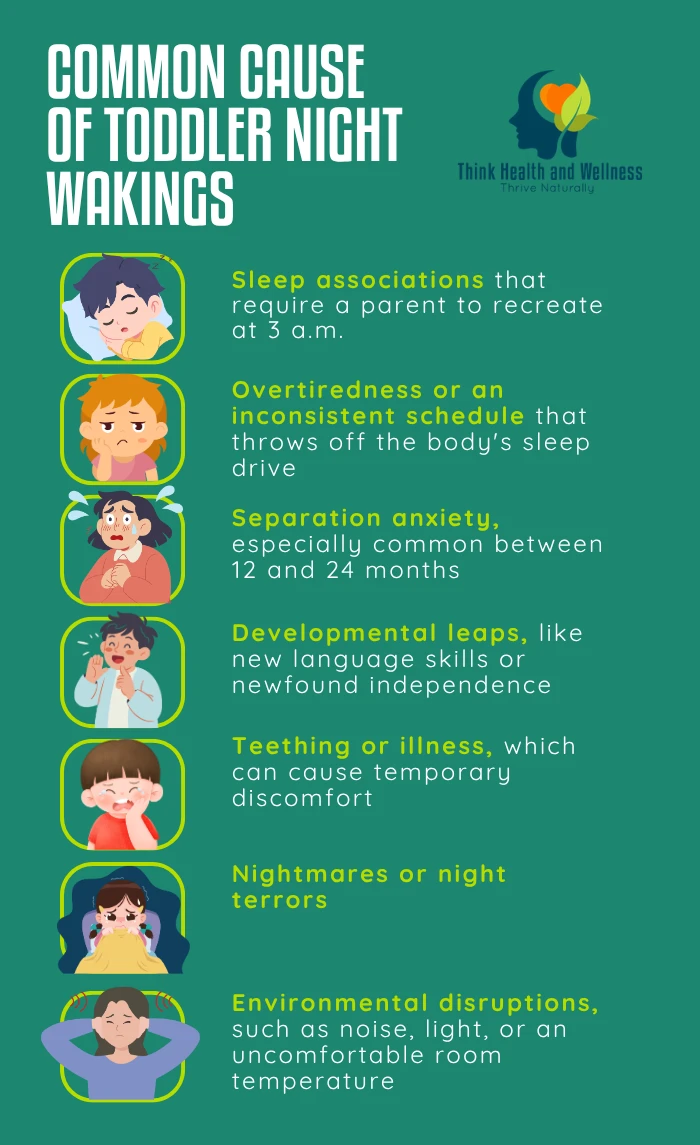
Common Causes of Toddler Night Wakings
There's rarely a single explanation for a rough patch of nights. Some of the most frequent culprits include:
Most toddlers experience several of these at different points or overlapping. This is why sleep can feel unpredictable during this stage.
Sleep Associations and the Self-Soothing Problem
One of the most common reasons toddlers struggle to sleep through the night has to do with how they learned to fall asleep in the first place. If a toddler is used to being rocked, nursed, patted, or held until they drift off, their brain links that specific action with the process of falling asleep. That's not a flaw in the child, it's simply how sleep associations work.
The catch is that when a toddler wakes briefly between sleep cycles, they look for the same conditions that helped them fall asleep at bedtime. If a parent's presence or a particular routine was part of that original process, the toddler may not be able to settle back down without it. This is why some toddlers who are rocked to sleep at bedtime wake several times overnight needing to be rocked again. While toddlers who fall asleep independently in their crib tend to do the same when they briefly stir later on.
Whatever happens right before a toddler falls asleep is often what they'll look for again in the middle of the night.
Physical Discomfort
Physical discomfort is one of the more straightforward causes of disrupted sleep. Teething, ear infections, colds, allergies, and acid reflux can all interrupt a toddler's sleep.
Teething in particular tends to get blamed for a lot of sleep troubles. While it can genuinely cause discomfort severe enough to wake a toddler, it's worth watching for other symptoms like fever, ear tugging, or congestion that might point to something else, like an ear infection.
If waking is accompanied by signs of pain, breathing difficulty, persistent coughing, or a fever, it's worth checking in with your pediatrician rather than assuming it will resolve on its own.
Developmental Changes and Big Life Transitions
Toddlerhood is packed with rapid development. Growth spurts in one area often show up as regression in another, including sleep. A toddler who is working hard on new language skills, mastering walking or climbing, going through potty training, or simply becoming more aware and opinionated about the world may have a harder time settling at night simply because their brain is so busy processing everything.
Major life changes have a similar effect. Moving to a new home, starting daycare, welcoming a new sibling, or even a change in routine like traveling can temporarily unsettle a toddler's sleep. These disruptions are usually short-lived once the child adjusts to the new normal.
Separation Anxiety, Fears, Nightmares, and Night Terrors
Separation anxiety often peaks in toddlerhood. It can show up specifically at bedtime. A child may suddenly becomes distressed at the idea of being apart from a parent. This is a normal developmental stage rather than a sign of an attachment problem.
As imagination develops, toddlers may also start experiencing nightmares. This typically happen during lighter sleep in the second half of the night. A toddler having a nightmare will usually wake up scared and want comfort.
Night terrors are different. They tend to happen earlier in the night during deep sleep. During a night terror, a toddler may seem awake, crying, or screaming, but they are actually still asleep and unaware of their surroundings. Unlike nightmares, most children have no memory of the episode once they wake up. The most helpful response to a night terror is to stay nearby. Keep your toddler safe without trying to fully wake them. Night terrors typically pass on their own within a few minutes.
Overtiredness
It might seem logical that a more tired toddler would sleep better, but the opposite is often true. The body releases stress hormones when overtired. This can make it more difficult to fall and stay asleep. It leads to more frequent night wakings rather than fewer.
Keeping naps and bedtime on a fairly consistent, age-appropriate schedule helps regulate a toddler's internal clock. It also reduces the likelihood of overtiredness building up over the course of the day.
Tips to Help Toddlers Sleep Through the Night
The exact approach depends on the underlying cause. These strategies tend to help across the board:
Build a calming, predictable bedtime routine. Bath, books, and a consistent wind-down sequence signal to a toddler's brain that sleep is coming.
Avoid screens one hour before bedtime. They can disrupt natural melatonin production.
Encourage independent sleep skills. Putting a toddler down drowsy but still awake gives them practice falling asleep without help. This supports self-soothing later in the night.
Offer an age-appropriate comfort object. A soft toy or blanket will work. Make sure your toddler is old enough for one to be safe.
Respond consistently. However you choose to handle night wakings, doing it the same way each time helps your toddler learn what to expect.
How to Respond When Your Toddler Wakes Up at Night
When a toddler does wake and call out, the general approach is to offer calm, brief reassurance rather than a full production. Keeping the room dark, your voice low, and interactions short helps signal that nighttime is still for sleeping. Picking a toddler up, turning on bright lights, or engaging in play or conversation can accidentally teach them that waking up leads to something more stimulating, which can encourage more frequent wakings over time.
This doesn't mean ignoring genuine distress. It means responding in a way that comforts without fully waking your toddler or reinforcing the idea that a parent needs to be present for sleep to happen.
The Sleep Environment Matters
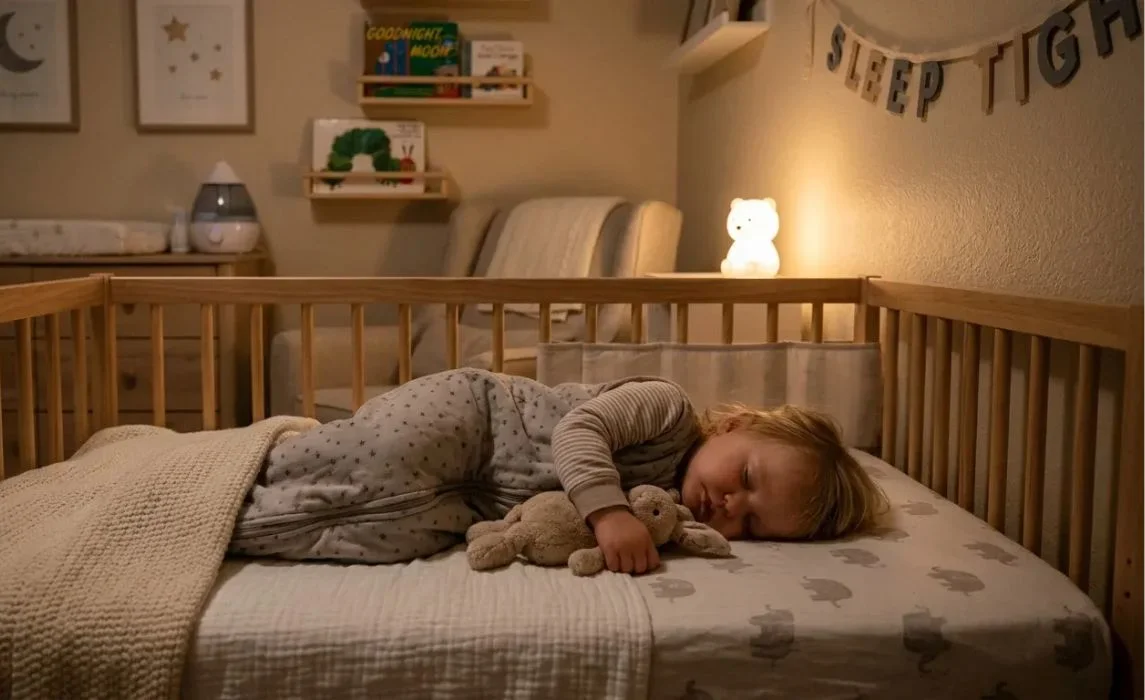
A toddler's bedroom plays a bigger role in sleep quality than many parents realize. A room that's too warm, too bright, or too noisy can cause more frequent wakings, even if a child doesn't consciously register why they're stirring. Aiming for a cool, dark, and quiet room, sometimes with the help of blackout curtains or a white noise machine, can make a noticeable difference. Consistency in the sleep space itself, using the same crib or bed and the same general setup night after night, also helps reinforce healthy sleep patterns.
Sleep Requirements
Sleep needs vary by age. General guidelines can help identify whether a toddler is getting too little or too much daytime sleep. Both of which can throw off nighttime sleep:
1 to 2 years old: around 11 to 14 hours total, including one or two naps
3 to 5 years old: around 10 to 13 hours total, often with naps tapering off
Too little daytime sleep can lead to overtiredness at bedtime. Too much daytime sleep can reduce a toddler's natural drive to sleep well at night. Finding the right balance is often a matter of small adjustments over time.
Common Misconceptions
A few beliefs tend to add unnecessary stress for parents:
"Toddlers should never wake up at night." Brief waking is normal and expected.
"Every waking needs a response." Sometimes the most helpful thing is to pause and see if a toddler settles on their own before stepping in.
"Sleep regressions last forever." Most regressions resolve within a few weeks as a toddler adjusts to a developmental leap or change.
When to Worry
Most night waking is developmentally normal and improves with time. But certain signs are worth bringing up with a pediatrician, including:
Loud or persistent snoring
Pauses in breathing during sleep
Gasping
Consistent signs of pain
Severe and frequent night wakings
These can sometimes point to conditions like sleep apnea or other issues that benefit from evaluation rather than at-home troubleshooting.
Toddler night wakings are common and temporary. They often cluster around growth spurts, developmental milestones, or life changes. Understanding why your little one is waking up is really the first step toward figuring out what will actually help.
It's tempting to look for a single quick fix when sleep falls apart. But toddler sleep troubles usually respond best to identifying the underlying cause and addressing it with patience and consistency rather than a one-size-fits-all trick. What works for a toddler going through a developmental leap might look different from what helps a toddler dealing with an inconsistent schedule or a genuine sleep association
Brief waking between sleep cycles is a normal part of sleep at any age. What varies is whether a toddler can settle back down independently.
Why does my toddler suddenly wake up crying at night?
This can be caused by a range of things, including nightmares, separation anxiety, teething discomfort, illness, or a developmental leap. Looking at any recent changes in routine, health, or milestones can help narrow down the cause.
Why does my toddler wake up at the same time every night?
Waking at a consistent time is often related to natural sleep cycle transitions. If it happens at the same point every night, it may be tied to a sleep association or a light sleep phase your toddler hasn't yet learned to move through independently.
How can I help my toddler sleep through the night?
Focus on a consistent bedtime routine, an age-appropriate schedule, a comfortable sleep environment, and giving your toddler the chance to fall asleep independently so they can use the same skill if they wake later.
Can teething cause toddlers to wake up at night?
Yes, teething discomfort can disrupt sleep. Though it's worth ruling out other causes if waking is severe or accompanied by fever.
How long do toddler sleep regressions last?
Most regressions last anywhere from a couple of weeks to about a month as a toddler adjusts to a developmental change.
Should I let my toddler self-soothe when they wake up at night?
Many sleep experts recommend giving a toddler a brief window to settle on their own before stepping in. This builds the skill of falling back asleep independently. How much space to give depends on your comfort level and your child's age and temperament.
What is the difference between nightmares and night terrors in toddlers?
Nightmares happen during lighter sleep, usually later in the night. A toddler will often wake up scared and remember the dream. Night terrors happen during deep sleep. It involve a child appearing distressed while still asleep with no memory of it afterward.
When should I worry about my toddler's night wakings?
It's worth talking to a pediatrician if you notice loud snoring, pauses in breathing, gasping, consistent pain, or wakings frequent enough to affect your toddler's mood or daytime functioning.
How much sleep does a toddler need each day?
Toddlers ages 1 to 2 generally need about 11 to 14 hours total. Those ages 3 to 5 need about 10 to 13 hours, including naps.