Toddler Won't Sleep? What's Really Going On and How to Help Them Sleep
Published on
June 9, 2026
Author
Craig Chou
Project Writer | Craig Chou encourages a holistic approach to fitness and well-being. His dedication to maintaining an open mind and challenging traditional medical literature with insights from contemporary studies sets him apart as a forward-thinking writer. He also studies Eastern medicinal techniques, and tries to bring Western ideas into it, thereby bridging two schools of thought in medicinal approach into one.
Can music and movement help fine motor skills?
Yes—finger plays, clapping games, and dance routines that use hand gestures all help. Combine rhythm and repetition for deeper learning.
How can educators encourage home practice?
Send home simple activity ideas, kits, or worksheets. Offer short instructions and encourage family involvement. Regular practice builds lasting progress.
What crafts are best for fine motor practice?
Try origami, sticker scenes, stringing pasta, or painting with Q-tips. Crafts that use small pieces build precision and control.
If you're reading this at 2 a.m. after your third trip back to your toddler's room, you're in very good company. Toddler sleep struggles are one of the most common things parents deal with, and they can feel exhausting and never-ending. Night wakings are a normal part of childhood development, not a sign that something has gone seriously off the rails.
That said, "normal" doesn't mean you have to live with it forever. When you can't get a toddler to sleep without repeated check-ins, parental presence, or a spot in your bed, it can wear down the whole family over time. The good news is that with some consistent boundaries, a solid bedtime routine, and a little patience, most kids can learn to fall asleep on their own and stay asleep through the night.
This guide breaks down why toddler sleep issues happen and gives you real, practical strategies to address them, without the guilt trip.
Why Children Wake Up At Night (i's actually normal)
Here's something that surprises a lot of parents: everyone wakes up at night. Adults do it too. We all cycle through lighter and deeper stages of sleep throughout the night, and we naturally surface between cycles. Most adults just roll over and drift back off without even remembering it happened.
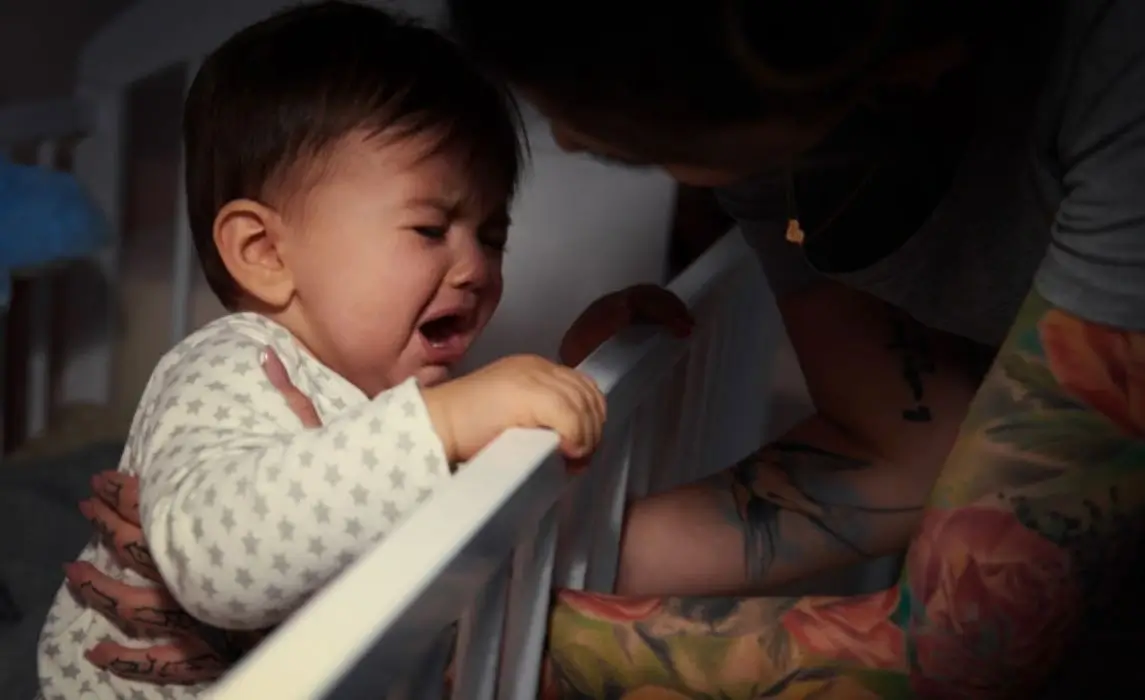
Toddlers are in the same boat, but they haven't yet learned how to navigate that transition back into deeper sleep on their own. So when they wake up between sleep cycles and something feels different from when they fell asleep, they call out, cry, or come padding into your room looking for you. They’re not trying to manipulate you; they simply need help because they haven’t learned to self-soothe yet.
The goal isn’t to completely stop night wakings, because that’s normal for toddlers. The goal is to help your toddler learn how to settle themselves back to sleep without needing your help every time.
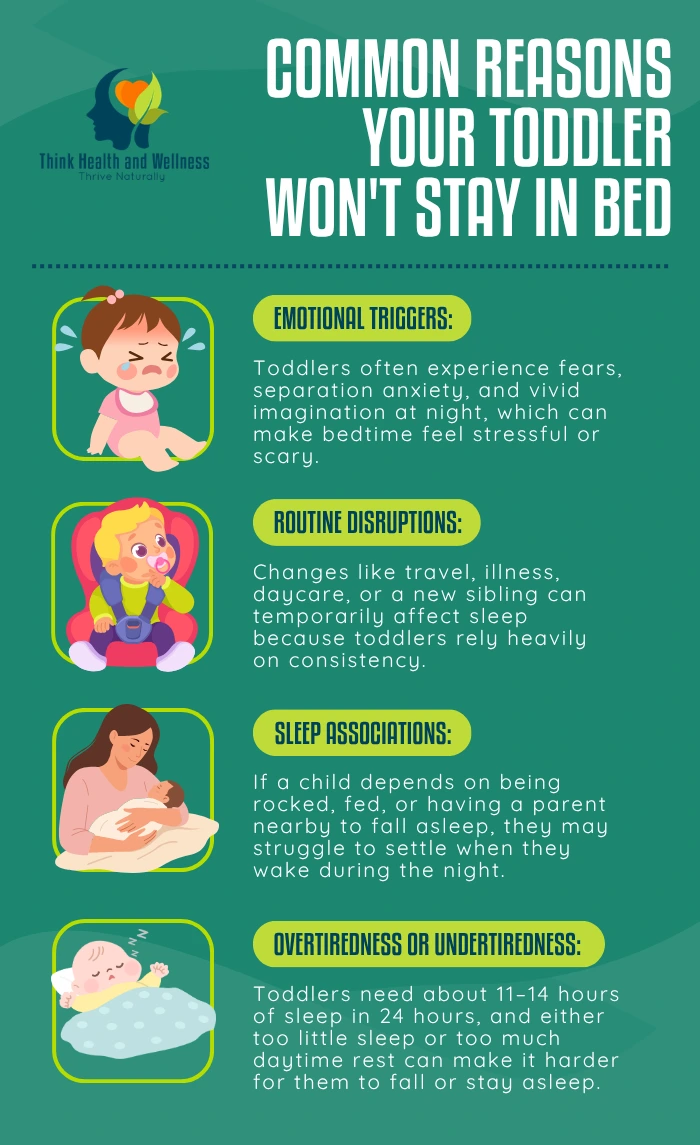
Common Reasons Your Toddler Won't Stay In Bed
Before you can address sleep issues, it helps to understand what's driving them. For toddlers and young children, nighttime visits usually come down to one of a few common causes.
1. Emotional Triggers
Toddlers have big feelings and a vivid imagination. Fears, anxieties, and worries tend to get louder at night when there are no distractions. Nightmares can feel incredibly real to a young child, and separation anxiety often peaks around ages 18 months to 3 years. It's completely normal for your child to feel scared or unsettled at night.
2. Routine Disruptions
Travel, illness, a new sibling, starting daycare, or any major change in routine can temporarily throw off sleep patterns. Kids thrive on predictability, and when something shifts, bedtime is often the first place it shows up.
3. Sleep Associations
This is probably the biggest factor. If your child has always fallen asleep being rocked, fed, or with you lying next to them, they've learned that those conditions are part of falling asleep. When they wake at night and those conditions are gone, they naturally seek them out again.
4. Overtiredness or Undertiredness
Every toddler has different sleep needs, but most toddlers require 11 to 14 hours of sleep in a 24-hour period. When they're not getting that, overtiredness can sneak up fast, which paradoxically makes it harder to fall asleep and stay asleep. On the flip side, a toddler who got too much daytime sleep or napped too late in the day might simply not be tired enough at bedtime.
What Is Toddler Sleep Regression?
If your toddler was sleeping fine and then suddenly wasn't, sleep regression might be what you're dealing with. A toddler may resist bedtime more than usual during a regression, and a toddler need for extra reassurance during this phase is completely normal. As the regression passes, a toddler gets back on track faster when the routine has stayed consistent throughout
Common toddler sleep regressions tend to cluster around 18 months, 2 years, and again around age 3. Each one typically lines up with a big developmental leap, things like a surge in language, a leap in cognitive awareness, or the emergence of stronger emotions and independence. The brain is working overtime, and sleep often takes the hit.
This usually lasts two to six weeks. That's the good news. The less good news is that how you respond during that window matters. If you introduce new sleep training or habits to get your toddler to sleep (like bringing your toddler into your bed every night or sitting with them until they fall asleep), those habits can stick around long after the regression has passed.
The best approach during a sleep regression is to stay as close to your normal bedtime routine as possible. Offer extra comfort and reassurance during the day, keep boundaries calm and consistent at night, and trust that it will pass.
Why Sleep Associations Make It Hard for Toddlers to Stay Asleep
A sleep association is anything your child relies on to fall asleep, whether that's nursing, a bottle, being rocked, having you in the room, or falling asleep in your bed.
Some sleep associations are totally fine and require no adult help, like a comfort object, white noise, or a nightlight. But others, often called "sleep crutches," require your active involvement. The problem with these is that when your toddler wakes between sleep cycles at 2 a.m. and the thing that helped them fall asleep is no longer there, they need it back to fall asleep again.
How to Handle Toddler Night Wakings and Encourage Better Sleep
If your toddler won't sleep through the night, how you respond to those wake-ups can make a big difference. While occasional night wakings are normal, consistent responses can help prevent them from becoming a long-term habit. From addressing nighttime fears to creating a predictable bedtime routine, these strategies can help your child develop healthy sleep habits and learn to settle back to sleep more independently.
1. Stay Calm and Keep Your Response Low-Key
When your toddler calls out or comes into your room, respond in a calm, matter-of-fact way. Your reaction sets the tone. Staying relaxed helps communicate that everything is okay and that nighttime is still for sleeping.
2. Offer Brief Reassurance
A simple phrase such as, "You're okay. It's still nighttime. Time to sleep," is often enough. Avoid lengthy discussions, negotiations, or repeated explanations, as these can make your child more alert and encourage future wake-ups.
3. Gently Return Your Toddler to Their Own Bed
If your toddler leaves their room, calmly walk them back to bed. The goal is to reinforce the expectation that sleep happens in their own sleeping space while still providing reassurance and support.
4. Keep Nighttime Interactions Short and Predictable
Try to respond the same way every time. A quick check-in, a reassuring phrase, and a return to bed create a consistent pattern that your child can learn and anticipate.
5. Avoid Making Night Wakings Rewarding
Middle-of-the-night visits should be as uneventful as possible. Avoid turning on bright lights, offering snacks, playing games, using screens, or engaging in long conversations that may unintentionally reinforce the behavior.
6. Create a Calm Sleep Environment
Keep lights dim, voices quiet, and stimulation to a minimum. A dark, cool, and peaceful environment helps signal that it is still time for sleep.
7. Address Fears and Sleep Anxiety During the Day
If your toddler is afraid of the dark, worried about monsters, or experiencing sleep anxiety, save those conversations for daytime. Children are often more receptive when they are rested and calm, and nighttime discussions can accidentally encourage future wake-ups.
8. Validate Fears and Provide Comfort Tools
During the day, encourage your child to talk about their worries. Listen, acknowledge their feelings, and work together on solutions such as reading books about nighttime fears, creating a simple "monster spray," or choosing a favorite stuffed animal to be a sleep companion.
9. Handle Nightmares with Brief Reassurance
After a nightmare, comfort your child and help them settle back into bed. If they want to talk more about what happened, save the detailed conversation for the next morning when everyone is fully awake.
10. Involve Your Toddler in Sleep Expectations
Toddlers often respond well when they feel involved in the process. During the day, talk about bedtime expectations and create a simple plan together so they know exactly what happens each night.
11. Establish Clear Bedtime Rules
A visual routine or simple bedtime rules can help reduce confusion and resistance. For example, brush teeth, read two books, get a goodnight hug, and stay in bed until morning. Predictability can make bedtime smoother.
12. Focus on Routines Instead of Reward Charts
While sticker charts may help with some behaviors, they often do not address the root causes of sleep challenges. Rather than focusing on rewards, prioritize healthy sleep habits, consistent expectations, and independent sleep skills.
13. Build a Consistent Bedtime Routine
A predictable 20–30 minute routine helps prepare your toddler's mind and body for sleep. Activities such as a bath, pajamas, brushing teeth, reading books, and quiet cuddles can signal that bedtime is approaching.
14. Practice Good Sleep Hygiene
Consistent bedtimes and wake times help regulate your child's body clock. Limiting screens before bed, encouraging physical activity during the day, and maintaining a cool, dark, quiet bedroom can all support better sleep.
15. Stay Consistent with Your Approach
Sleep habits rarely change overnight. Your toddler may continue testing boundaries or waking during the night for a while. Responding in the same way each time helps reinforce the new expectations.
16. Focus on Progress, Not Perfection
Illness, travel, developmental milestones, and stressful events can temporarily disrupt sleep. If setbacks happen, return to your usual routine as soon as possible. Long-term consistency is more important than having a perfect night every time.
How to Transition Your Toddler Away From Co-Sleeping
If your toddler is used to sleeping in your bed and you're ready to transition to independent sleep, going cold turkey can feel really abrupt for both of you. Taking things slowly often works better.
One option is to put a small mattress or sleeping mat on the floor of your room. When your child comes in at night, they can sleep there instead of in your bed. It's close enough to feel safe, but it's a step toward their own sleep space. From there, you can gradually move the mat closer to the door, then to the hallway, and eventually back to their own room.
Another approach is to sit with your child as they fall asleep, but gradually reduce your involvement over several weeks. First you sit on the bed, then in a chair beside the bed, then near the door, then outside the door. It's slower, but it can feel less scary for kids who have a lot of separation anxiety. Whatever method you choose, the key is moving at a pace that feels manageable for your child while still making forward progress.
Toddler sleep struggles are incredibly common, and they are not a sign that you've failed or that your child is uniquely difficult. Night wakings are developmentally normal, and plenty of kids go through phases where sleep falls apart for a while. That doesn't mean you have to just white-knuckle it until they grow out of it.
With a consistent bedtime routine, clear and calm boundaries at night, and some work on building independent sleep skills, most toddlers can learn to sleep through the night. It takes time and there will be setbacks, especially during illness or big life changes. But the progress is real, and it builds over time.
Give yourself some grace in the process. You're doing a hard thing at a hard hour, and the fact that you're looking for ways to help your child sleep better says a lot about the kind of parent you are.