Project Writer | Craig Chou encourages a holistic approach to fitness and well-being. His dedication to maintaining an open mind and challenging traditional medical literature with insights from contemporary studies sets him apart as a forward-thinking writer. He also studies Eastern medicinal techniques, and tries to bring Western ideas into it, thereby bridging two schools of thought in medicinal approach into one.
Can music and movement help fine motor skills?
Yes—finger plays, clapping games, and dance routines that use hand gestures all help. Combine rhythm and repetition for deeper learning.
How can educators encourage home practice?
Send home simple activity ideas, kits, or worksheets. Offer short instructions and encourage family involvement. Regular practice builds lasting progress.
What crafts are best for fine motor practice?
Try origami, sticker scenes, stringing pasta, or painting with Q-tips. Crafts that use small pieces build precision and control.
If you've ever tried to get your kids off the couch and into something active, you already know the struggle. Between screen time battles and busy after-school schedules, finding an activity the whole family can actually enjoy together feels like a win. Yoga can be a great solution. And no, you don't need to be flexible, certified, or even that coordinated. Family yoga is honestly one of the most accessible things you can do together at home, and it works whether your kid is three or thirteen.
Even just ten minutes of moving, stretching, and breathing together can shift the whole energy of your household. Think of it less like a fitness class and more like play with intention.
What Family Yoga Actually Looks Like
Family yoga is nothing like the Instagram yoga class version where everyone's wearing matching outfits and holding perfect poses on a sun-drenched deck. In real life, someone is probably going to collapse into giggles during Downward-Facing Dog, the cat will wander into the middle of the mat, and your toddler will do their own thing entirely. That's okay, that's actually the point.
Yoga for kids is about exploring what their body can do, moving with someone they love, and learning to pay attention to how they feel inside. When you take the pressure off "doing it right," yoga becomes something kids want to do rather than something they're dragged into.
Why Practicing Yoga Is So Good For Children
You might already know that yoga is great for adults, but the benefits for children go surprisingly deep. On the physical side, regular yoga helps kids build flexibility, balance, coordination, and body awareness. These aren't just nice-to-haves. Strong body awareness is the foundation for sports, fine motor skills, and even sitting still in class.
Emotionally, yoga gives kids a language for managing what's happening inside them. Breathing exercises teach them how to calm themselves when they're overwhelmed. Poses that require focus, like balancing on one leg, help train attention. Over time, kids who practice yoga tend to be better at self-regulation, which is a fancy way of saying they're a little more capable of handling big feelings without melting down completely.
There's also the confidence piece. When a child figures out how to hold a new pose, even a simple one, there's genuine pride in that. It builds a sense of "I can try hard things."
How Yoga Practice Builds Parent-Child Connection
One of the underrated gifts of family yoga is the physical closeness. It asks you to actually face each other, touch, move together, and be present. That’s meaningful, even if it only lasts fifteen minutes.
Partner poses in particular create moments of teamwork that kids really respond to. When parent and child are working together to hold a shape, you're building trust and communication in a really tangible way. There's something about sharing a physical challenge together that deepens connection in a way that just talking doesn't always do.
Fun and Easy Yoga Poses For Kids
These kids' yoga poses are gentle, perfect for beginner, and work for kids of most ages.
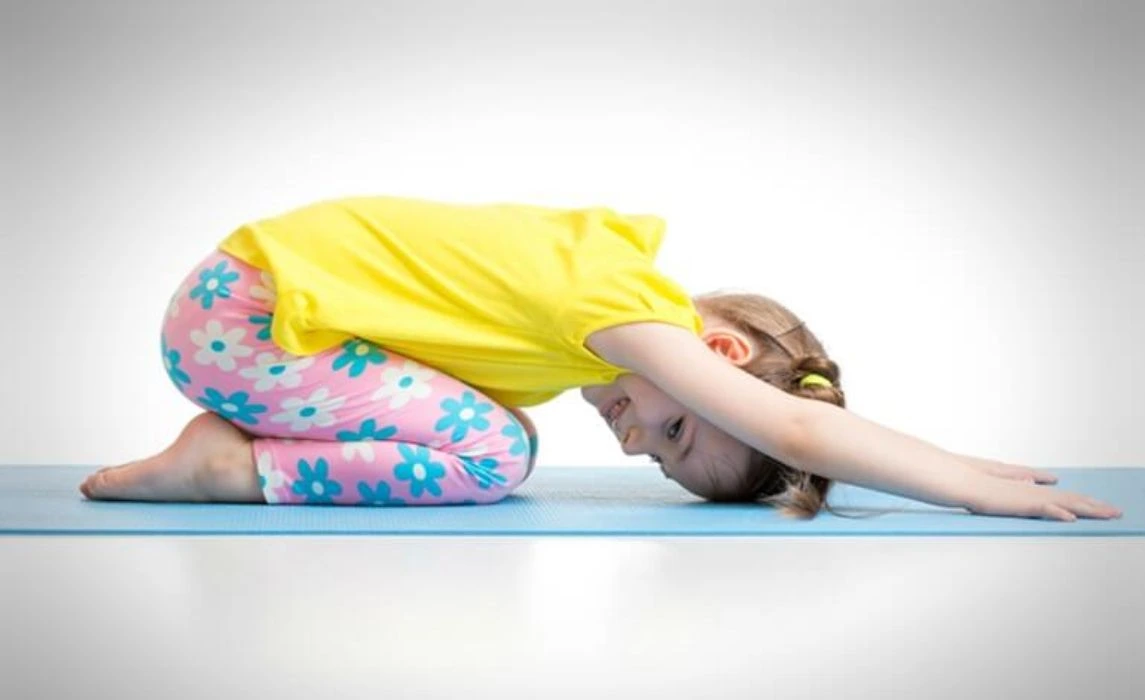
1. Child's Pose (Balasana)
Kneel down, sit back on your heels, and fold forward with your arms stretched out in front of you. This pose helps kids calm down when they feel anxious or overstimulated, and they often enjoy calling it a “hiding” or “resting” pose.
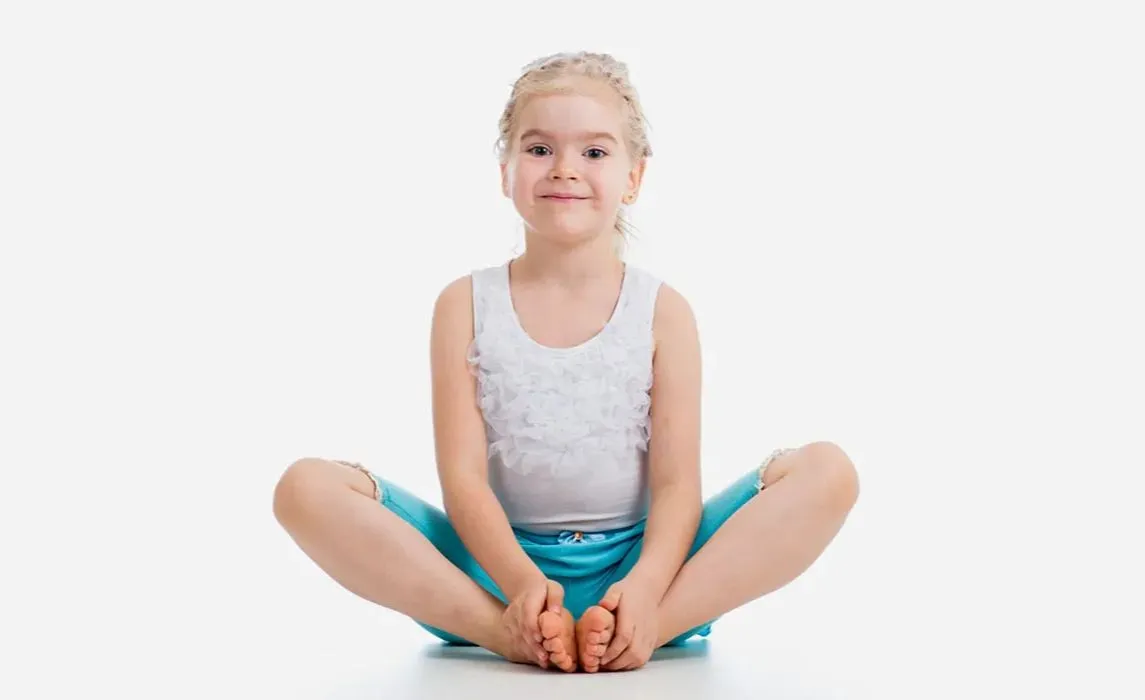
2. Butterfly Pose (Baddha Konasana)
Sit with the soles of your feet pressed together and let your knees fall open like butterfly wings. Move your knees up and down in a relaxed, gentle motion. It's a wonderful hip opener and kids find the flapping part fun. Add a little story about flying somewhere magical to keep it engaging.
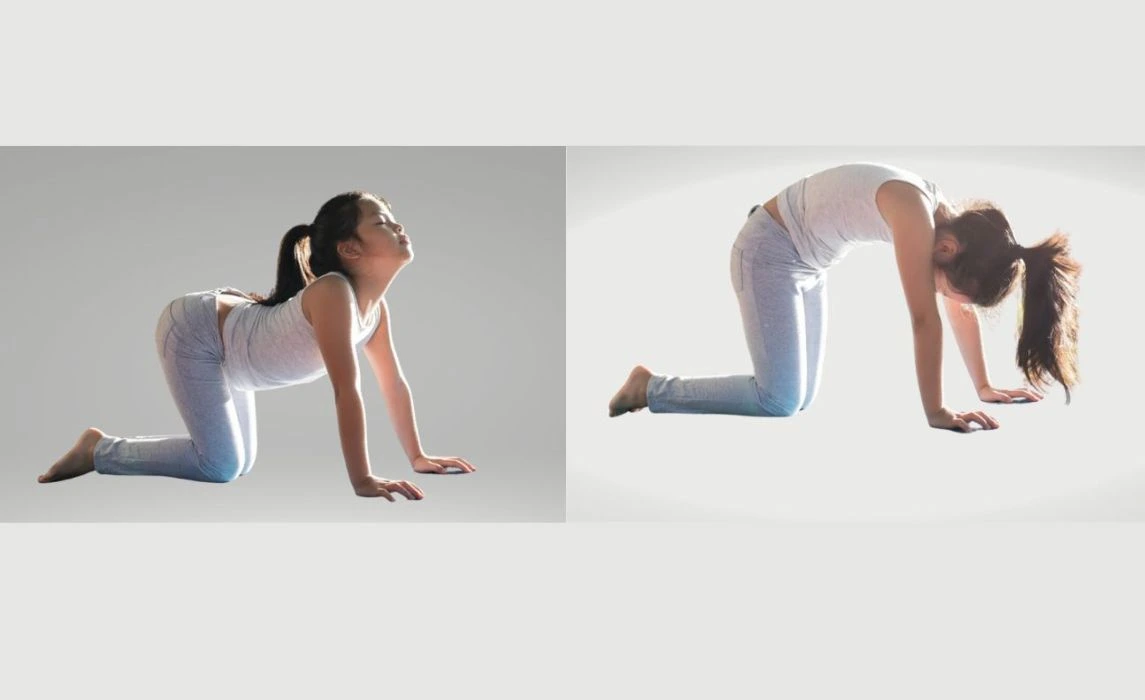
3. Cat-Cow Pose
On all fours, inhale into Cow by dropping your belly and looking up. Exhale into Cat by rounding your back and tucking your chin. This is one of the best poses for releasing tension in the spine, and the breathing coordination makes it great for teaching breath awareness.
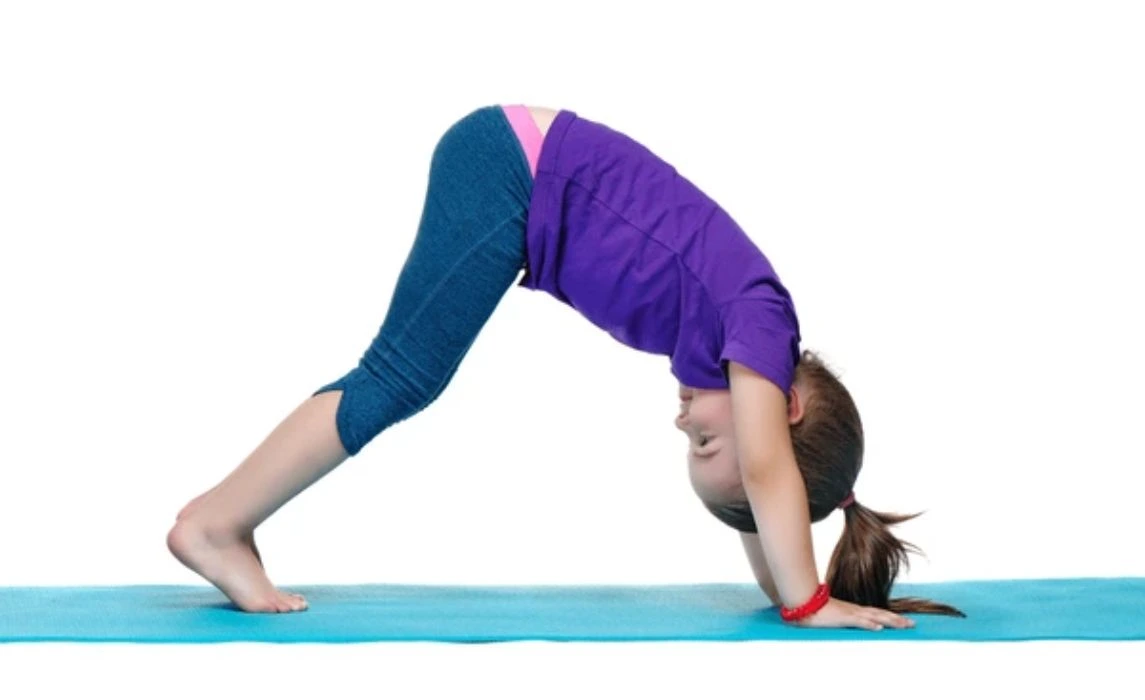
4. Downward-Facing Dog (Adho Mukha Svanasana)
From all fours, tuck your toes and push your hips up and back, forming an upside-down V shape. Press into your palms and lengthen your spine. Kids who've been sitting at a desk all day respond really well to this one. You can also do it facing each other, which is just fun.
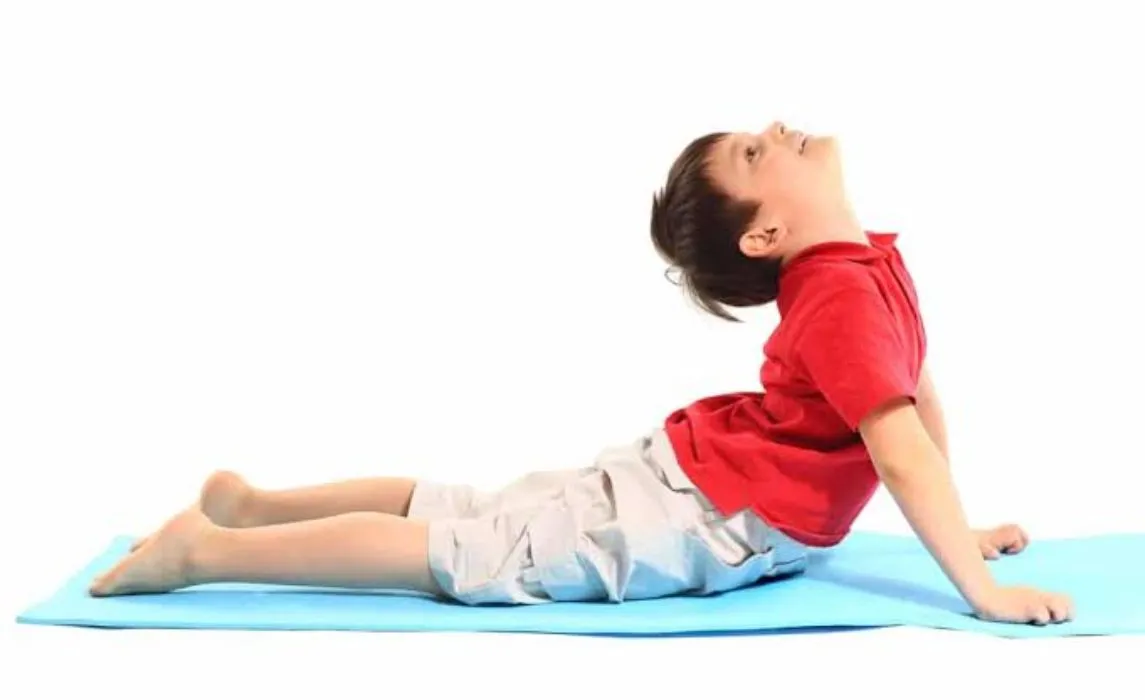
5. Cobra Pose (Bhujangasana)
Lie on your belly, place your hands beside your chest, and slowly press up to lift your head and chest off the floor. It strengthens the back while opening the chest. For younger kids, pretend to be a snake slithering through the grass to make it more fun.
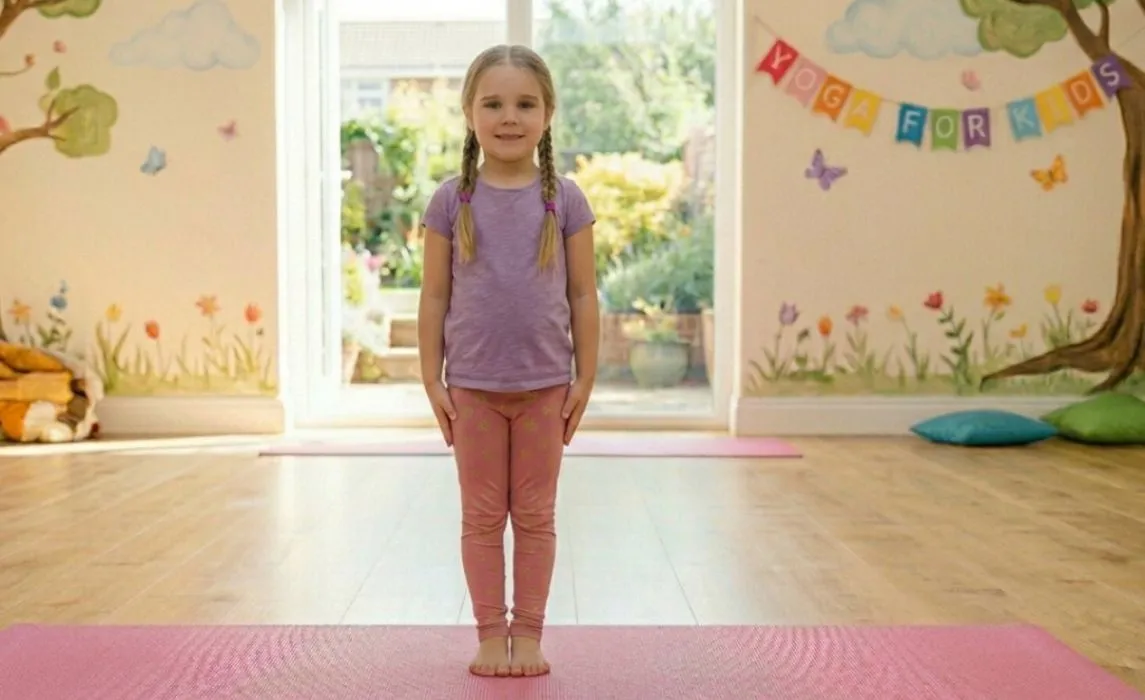
6. Mountain Pose (Tadasana)
Stand upright with feet together, arms relaxed at your sides, and breathe deeply. It sounds almost too simple, but it teaches kids how to feel grounded and present in their own body. Use it as a starting point at the beginning of a session or a reset between more active poses.
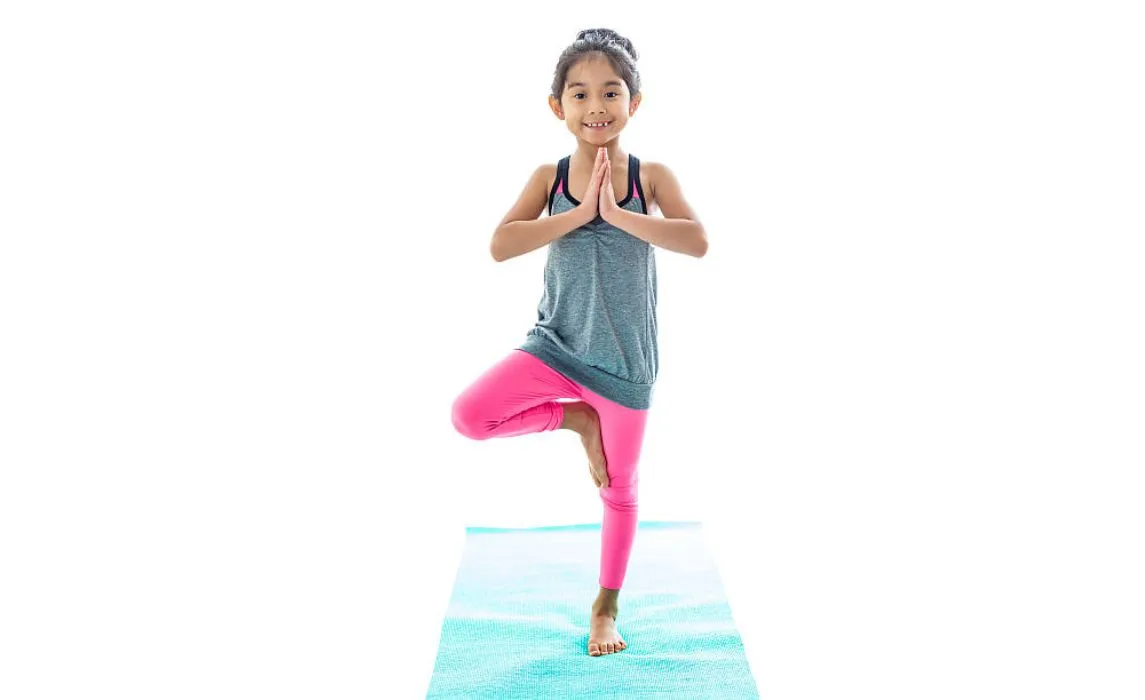
7. Tree Pose (Vrksasana)
Stand on one foot and bring the sole of the other foot to rest against your inner ankle or calf. Place your palms together at your chest or lift your arms like tree branches. It builds balance and focus, and kids often enjoy gently seeing who can hold it the longest. A little wobble just means the wind is in the trees.
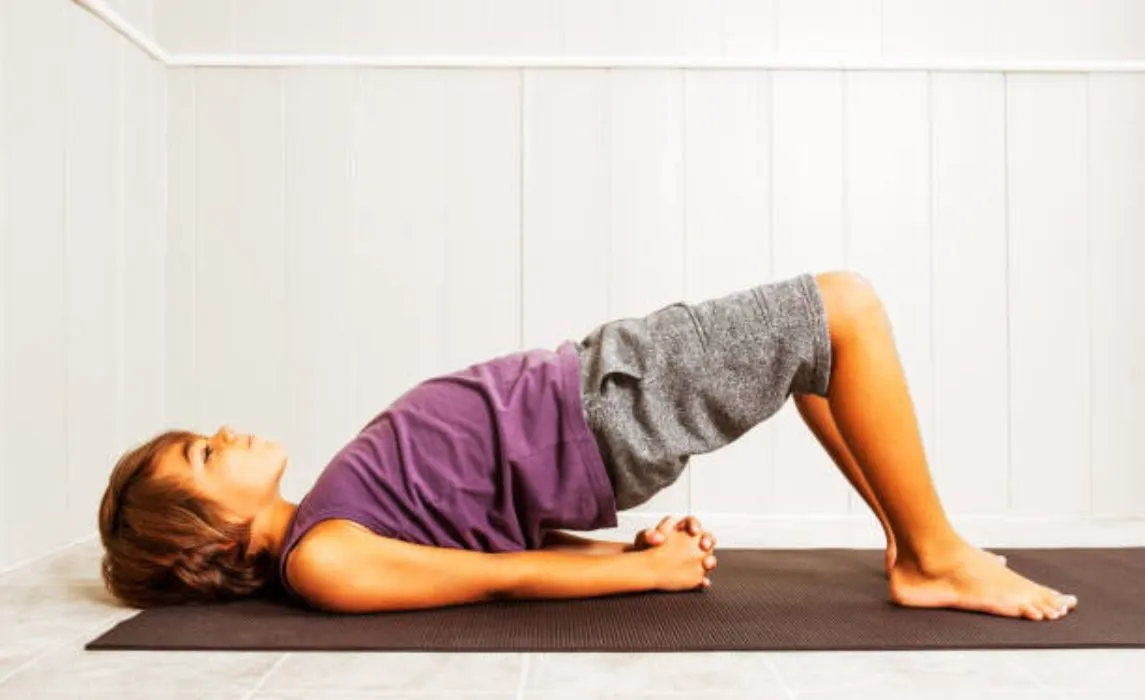
8. Bridge Pose (Setu Bandhasana)
Lie on your back, bend your knees, and keep your feet flat. Press through the feet to raise the hips up. This helps strengthen the back and legs and feels great even for beginners. Hold, then lower slowly.
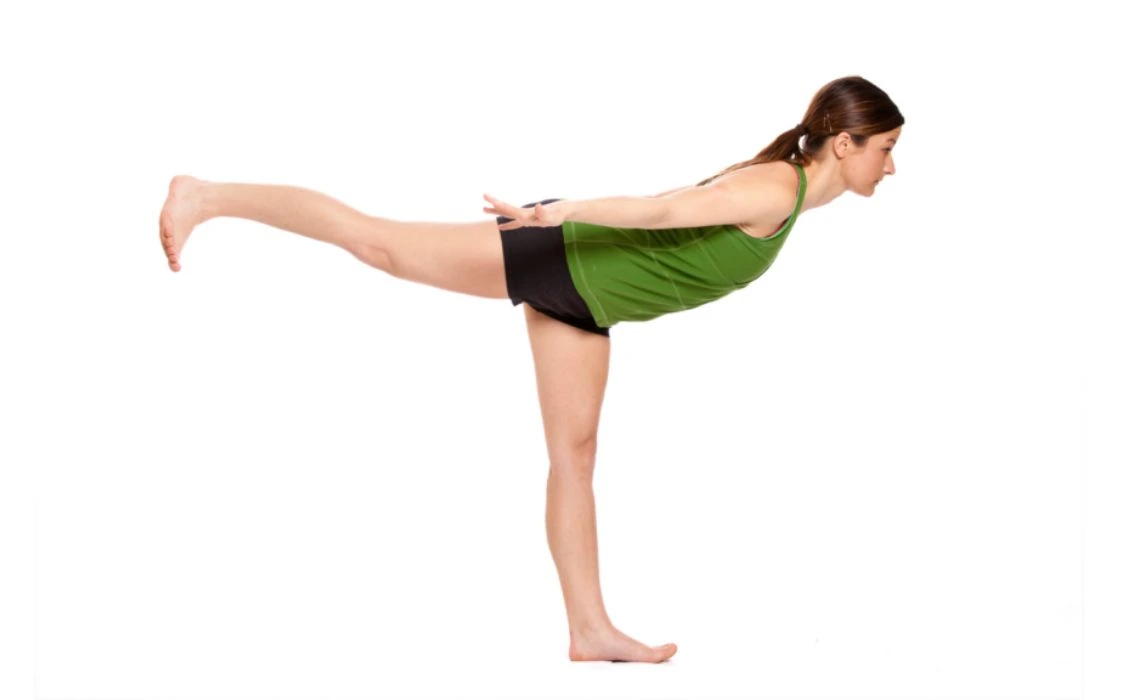
9. Airplane Pose (Warrior III Variation)
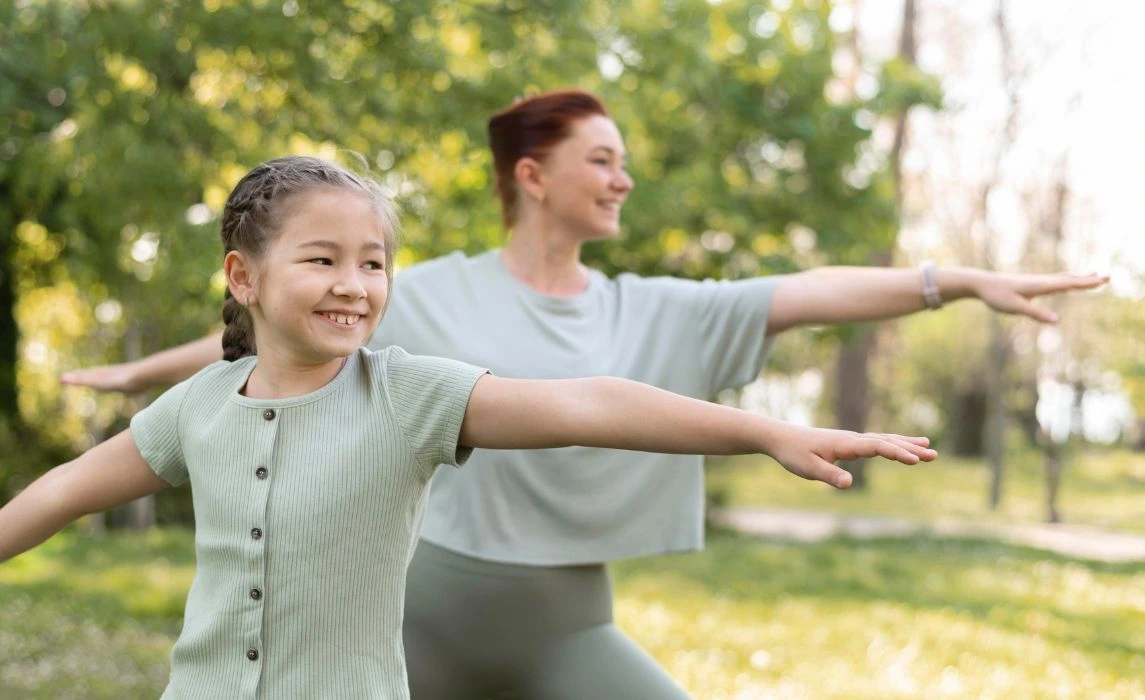
Stand on one foot, lean forward, and extend your arms out to the sides while lifting the other leg behind you. It's a balance challenge that kids find genuinely exciting. Wobbling is encouraged.
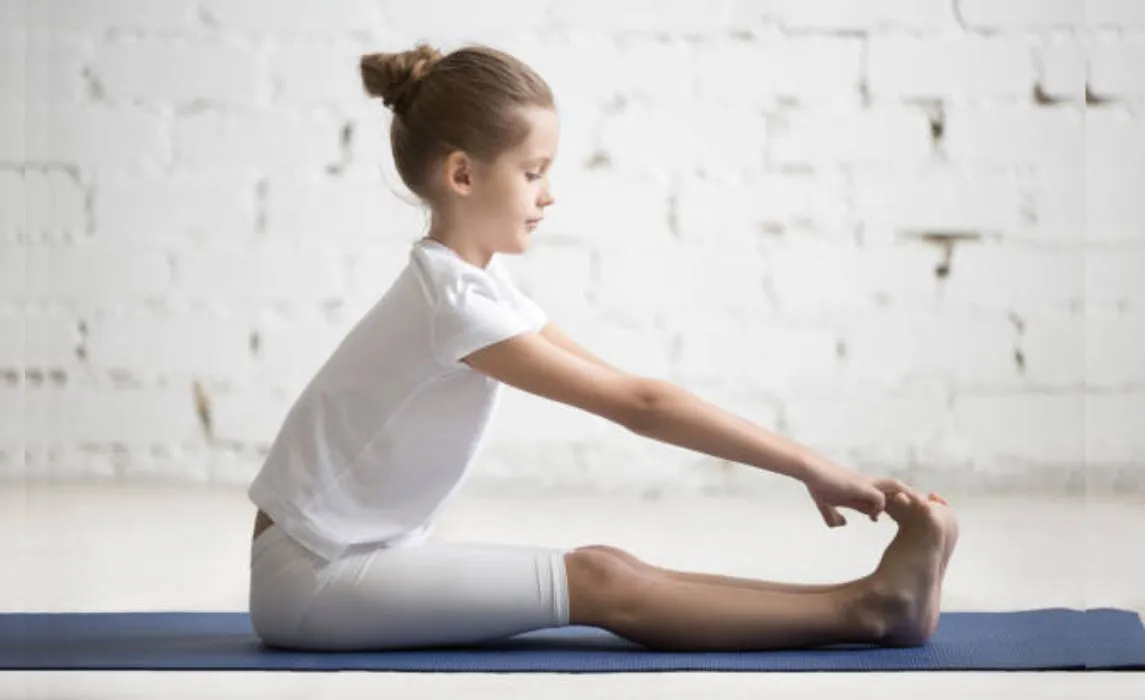
10. Seated Forward Fold (Paschimottanasana)
Sit with legs extended. Stretch forward toward your feet as you breathe. It's a great hamstring stretch and a naturally calming pose to end a session with.
Partner yoga is where the fun really ramps up, and it's also where a lot of the bonding happens.
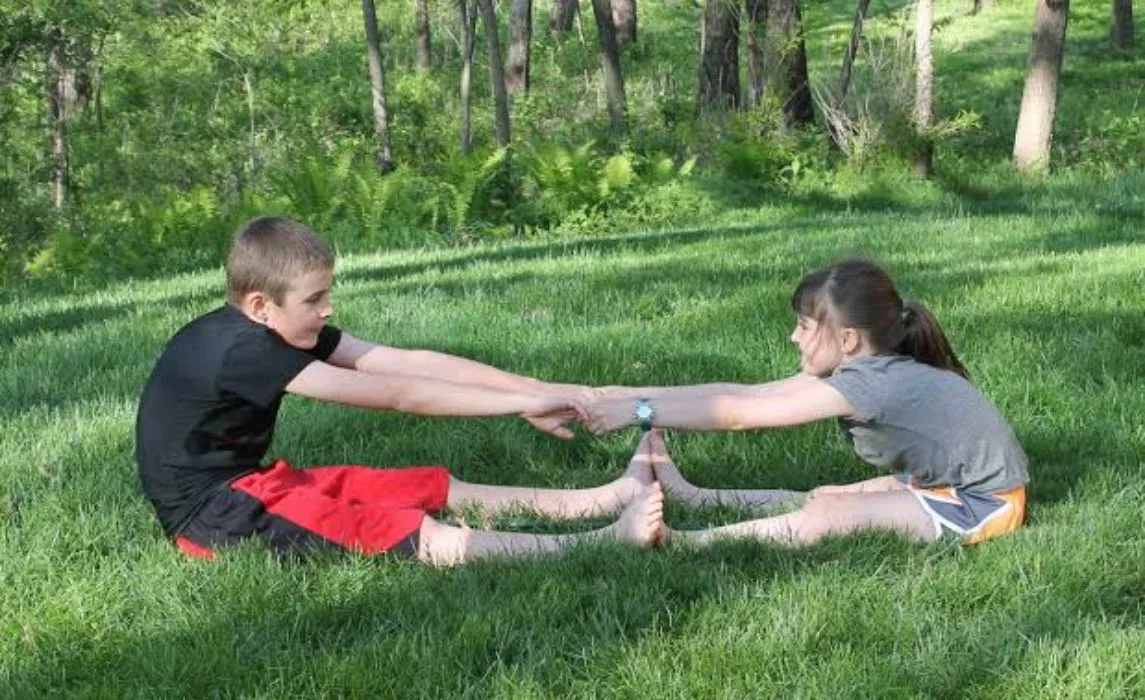
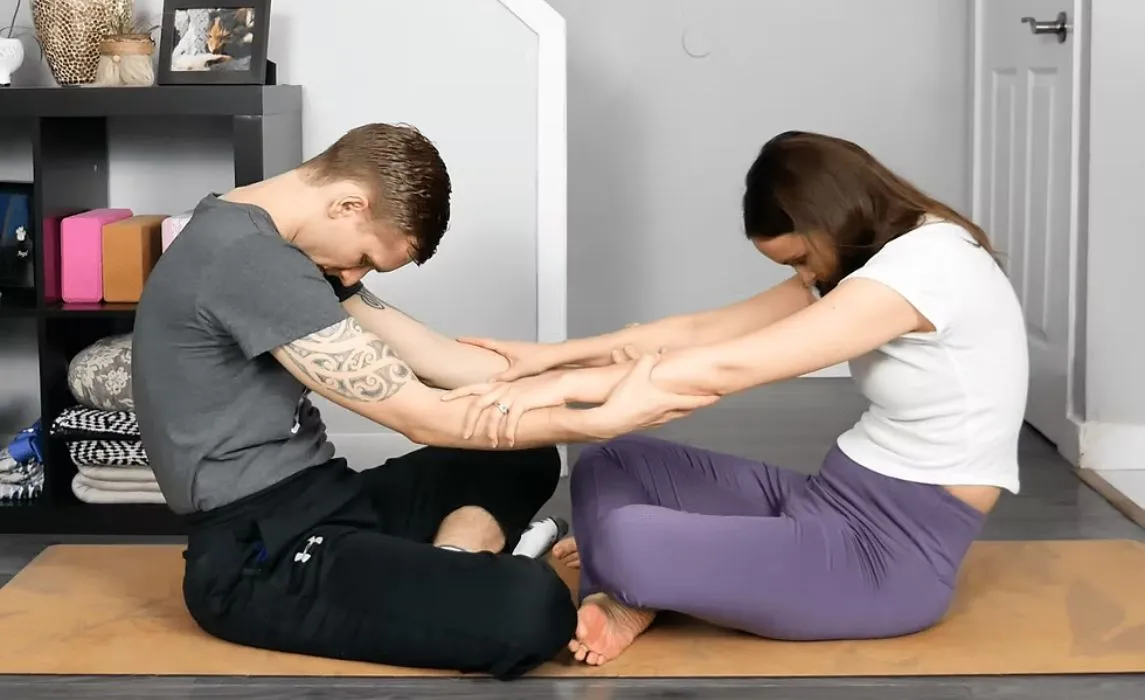
1. Seesaw Pose
Face each other with legs straight, feet touching, and hold hands or wrists. One person leans forward while the other leans back, then switch. It's like a human seesaw and doubles as a nice hamstring and back stretch.
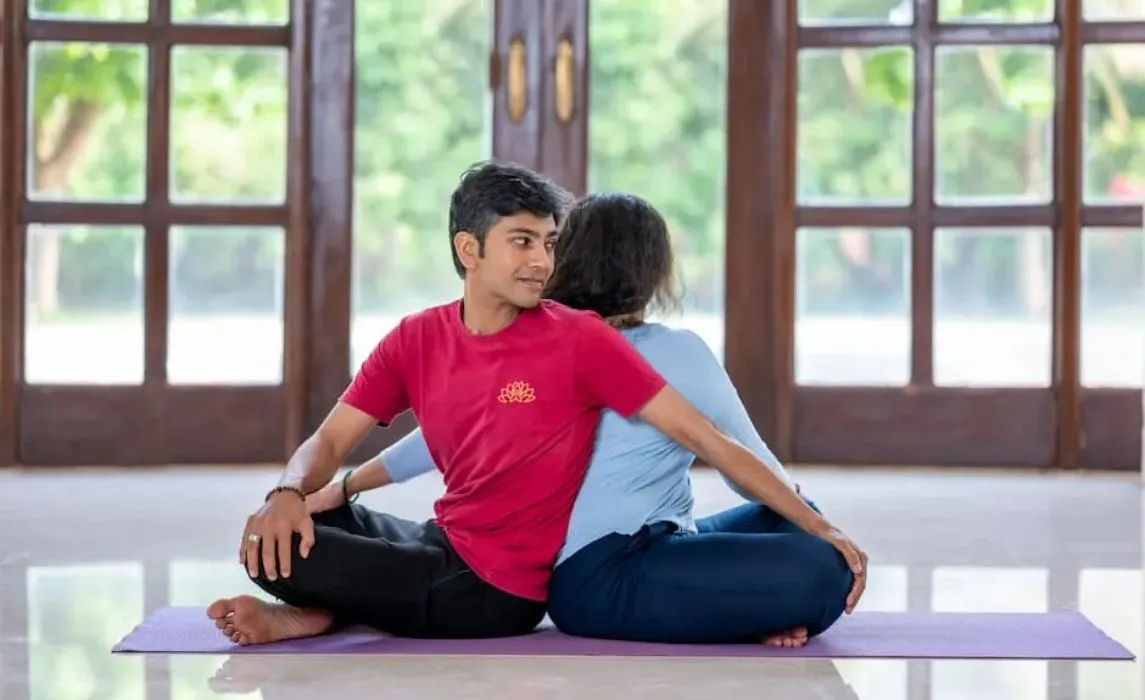
2. Partner Seated Twist
Sit back to back in a cross-legged position. Inhale together, then as you exhale, both twist to the right and hold for a few breaths. Come back to center, then gently twist to the left. The synchronised breathing part is great for kids because it makes them slow down and pay attention.
3. Partner Seated Cat-Cow
Sit cross-legged facing each other and hold hands or forearms. As one person rounds their back and tucks their chin (Cat), the other gently lifts their chest and looks up (Cow). Move slowly back and forth together, matching your breathing. Kids enjoy the teamwork, and it helps improve coordination, flexibility, and body awareness.
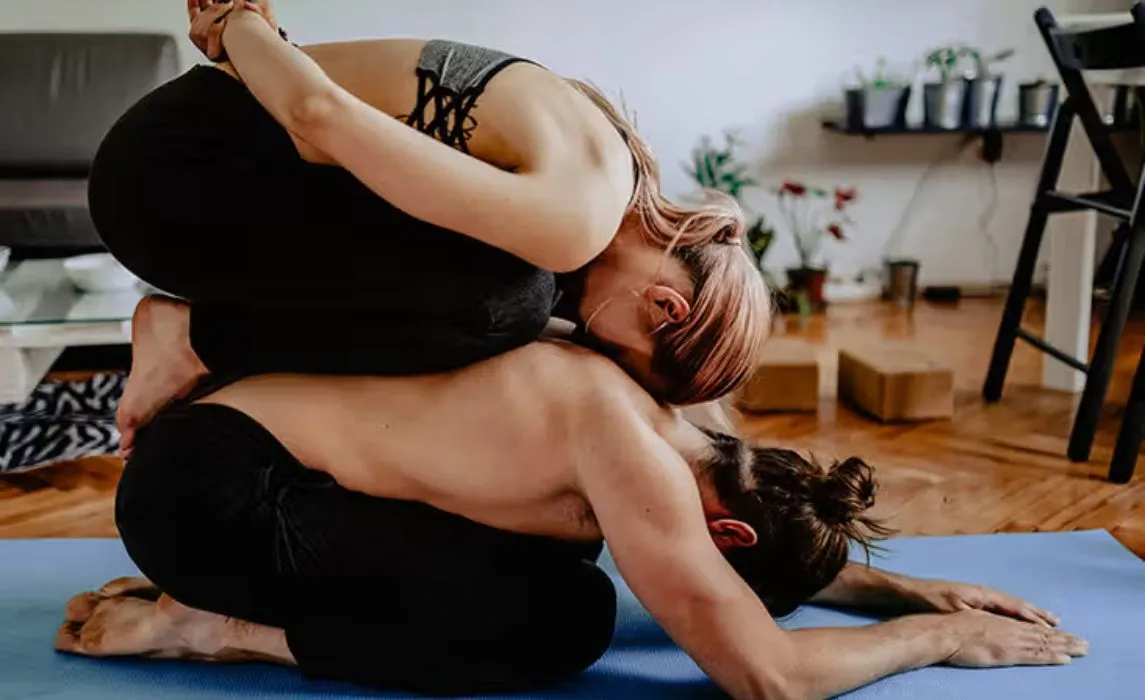
4. Stacked Child's Pose
One person does Child's Pose while the other person gently lays their back across theirs, facing upward. It's a passive stretch for both and surprisingly calming. Definitely one to try during a slow, quiet evening.
Why Animal Poses and Storytelling Make Kids Love Yoga
The secret to keeping kids engaged with yoga is imagination. Call the poses by animal names. Turn a sequence into a story.
"We're exploring a jungle. First we're snakes in the grass (Cobra). Then we spot a dog resting in the sun (Downward Dog). A butterfly flies past (Butterfly Pose). We climb a tree and look out like eagles (Warrior III). Then we rest in a cave (Child's Pose)."
That's a full yoga sequence that a four-year-old will happily follow. Music helps too. A calm playlist in the background sets the tone without you having to constantly redirect energy. You can be silly, the more fun you're having, the more your child will want to do it again tomorrow.
How Long Should Yoga Be For Kids?
Short is best. A 45-minute class isn’t realistic or needed.
For toddlers and preschoolers, five to ten minutes is plenty. Their attention spans are short and that's perfectly appropriate for their developmental stage. For primary school-aged children, ten to twenty minutes tends to work well. Older kids and teens can build up to longer sessions if they're interested, but there's no need to rush it.
The key is consistency over duration. Ten minutes of family yoga three or four times a week will do far more for your child than a single hour-long session once a month.
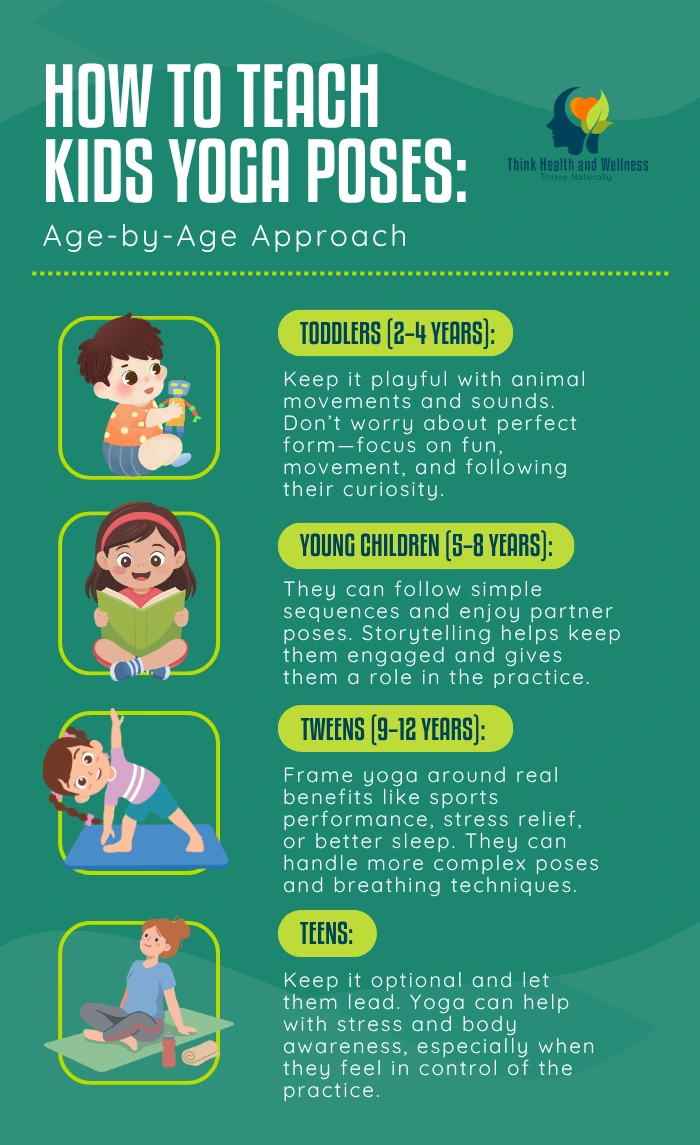
Keep it purely playful. Imitate animals, make silly sounds, and don't worry about whether they're "doing the pose." They're exploring movement and that's enough. Follow their lead completely.
Young children (5 to 8 years)
This is when kids can start following simple sequences and really engaging with partner poses. Storytelling works incredibly well here. They love having a role to play within the practice.
Tweens (9 to 12 years)
Older kids often respond better when yoga is framed around something concrete, like better performance in sports, stress relief, or improved sleep. They can handle more complex poses and partner sequences. Some will take to the mindfulness and breathing elements quite naturally.
Teens
If you have a teenager who seems remotely interested, lean in gently. Yoga can be a powerful tool for managing the stress and body image pressures that come with adolescence. Let them take the lead on what they want to try.
Yoga as an alternative to screen time
One of the best things about family yoga is that it fills exactly the kind of gap that screens tend to fill: unstructured downtime that feels low-effort. The difference is that when the session is over, everyone feels calmer and more connected rather than irritable and overstimulated.
Don't make it a big deal. "Hey, let's do ten minutes of stretching before dinner" is enough. Over time, kids start requesting it themselves, especially if you've built in enough fun and connection that they associate it with something they actually enjoy.
The real point of family yoga
At the end of the day, family yoga is less about poses and more about presence. Whether you try one pose tonight before bed or commit to a regular family practice, you're giving your child something valuable: a way to move, to breathe, and to connect. Those moments matter more than whether anyone can touch their toes.